
Medically reviewed by
USA Clinics Medical Review Team
Reviewed September 2026
Low-fiber foods, spicy dishes, alcohol, and caffeine are among the most common foods that trigger hemorrhoids, largely because they contribute to constipation, dehydration, or rectal irritation. Diet does not cause hemorrhoids on its own, but it strongly influences how often symptoms flare and how severe they feel.
We will walk through the specific foods most linked to flare-ups, the foods that tend to ease symptoms, and a few habits worth avoiding once irritation sets in.
How Diet Affects Hemorrhoid Symptoms
Hemorrhoids are swollen veins in the lower rectum and anus. Diet influences hemorrhoid symptoms mainly through three mechanisms: constipation, dehydration, and direct irritation of the rectal lining.
A low-fiber diet produces harder, slower-moving stool, which requires more straining to pass. That straining places direct pressure on already sensitive rectal veins and is one of the most consistent triggers for hemorrhoid flare-ups. Dehydration compounds the problem, since even fiber-rich meals cannot soften stool effectively without enough water intake. Some foods and drinks also irritate the rectal lining directly on the way out, which can intensify burning or itching.
Note: Diet does not cause internal hemorrhoids to develop from nothing, but it is one of the most controllable factors in how often symptoms return.
Common Foods That Trigger Hemorrhoids
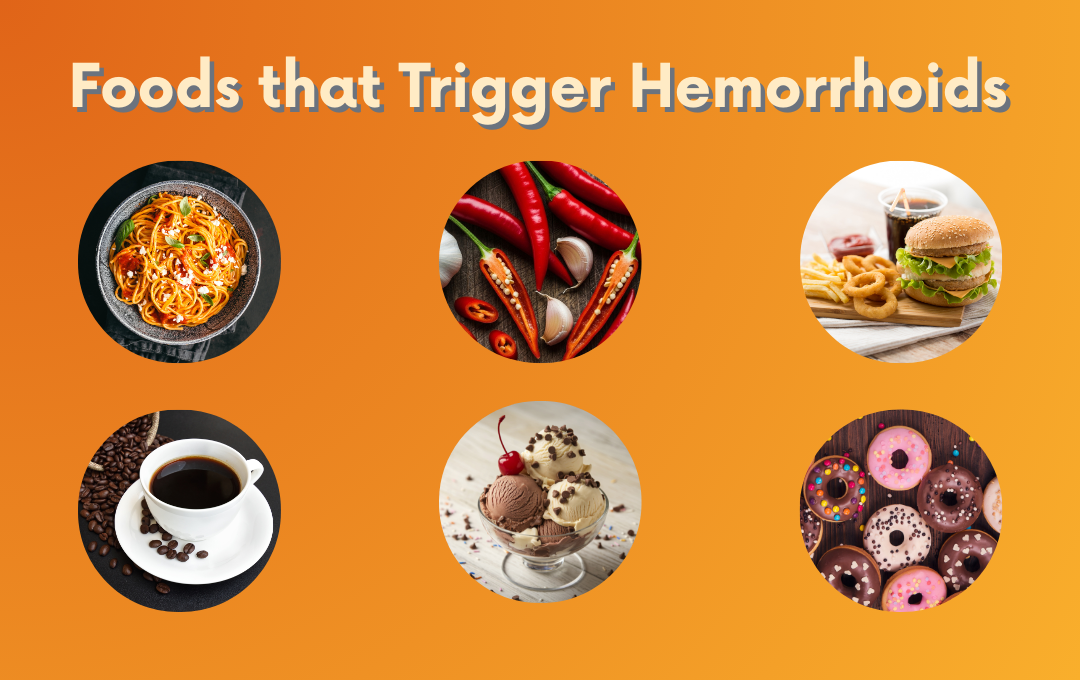
These food categories are most frequently associated with hemorrhoid flare-ups:
- Refined grains – White bread, white rice, pasta, and many breakfast cereals are low in fiber and can slow digestion, contributing to constipation over time.
- Spicy foods – Hot peppers, chili-based sauces, and heavily seasoned dishes contain compounds that can irritate the rectal lining as they pass through the digestive tract, intensifying burning or itching.
- Processed and fast food – Packaged snacks, frozen meals, and fast food are typically low in fiber and high in sodium, which can increase bloating and constipation.
- Caffeine – Coffee, tea, and energy drinks can act as diuretics, contributing to dehydration. Caffeine may also stimulate bowel movements in a way that increases urgency and straining for some people.
- Alcohol – Alcohol can dehydrate the body and slow digestion, both of which make stools harder to pass and can worsen existing symptoms.
- Fried and high-fat foods – French fries, doughnuts, and other fried items are harder to digest and can slow bowel movements, contributing to constipation.
- Dairy products – Cheese, whole milk, and ice cream can cause gas, bloating, and harder stools in some individuals, particularly with higher intake.
Note: Not everyone reacts to every food on this list. Tracking your symptoms alongside your diet for a week or two can help identify your specific triggers.
Explore Your OptionsFoods That May Help Ease Hemorrhoid Symptoms
Fiber softens stool and reduces the need to strain. The Academy of Nutrition and Dietetics suggests working toward roughly 14 grams of fiber for every 1,000 calories eaten, or about 25 to 35 grams a day for most adults.
- Fruits and vegetables – Berries, pears, leafy greens, and broccoli are high in fiber and often water content, which helps soften stool.
- Whole grains and legumes – Oats, barley, whole-wheat products, beans, and lentils are among the most fiber-dense foods available.
- Water and hydrating fluids – Water is the best choice. Prune juice and herbal teas may also support softer stools for some people.
If your current diet is low in fiber, increase intake gradually over a week or two. A sudden jump can cause bloating, gas, or diarrhea, which is its own source of discomfort.
What Not To Do During a Hemorrhoid Flare-Up
Alongside dietary choices, a few common habits can extend or worsen a flare-up:
- Do not strain or push during bowel movements. Straining is one of the clearest triggers for worsening symptoms.
- Do not sit on the toilet longer than necessary. Prolonged sitting increases pressure on the anal veins.
- Do not skip fiber and water because eating feels uncomfortable. Reducing intake during a flare can worsen constipation.
- Do not rely on trigger foods out of habit. Spicy meals, alcohol, and caffeine can extend a flare that might otherwise resolve within days.
Treatment option: hemorrhoid treatment
Diet can ease symptoms. It does not treat the underlying condition.
More fiber, more water, and fewer trigger foods can reduce how often symptoms flare and how severe they feel. But if you are experiencing persistent bleeding, prolapse, pain during bowel movements, or ongoing itching and pressure, dietary changes alone are unlikely to resolve the problem. These are signs that the hemorrhoidal tissue has been significantly affected.
USA Hemorrhoid Centers offers minimally invasive, outpatient treatment performed by experienced interventional radiologists. Procedures are completed in the office, with no general anesthesia required and a rapid return to daily activities for most patients. The first step is a consultation to evaluate your symptoms and discuss the options that fit your situation.
Frequently asked questions
- National Institute of Diabetes and Digestive and Kidney Diseases. Hemorrhoids: Symptoms and Causes. https://www.niddk.nih.gov/health-information/digestive-diseases/hemorrhoids/symptoms-causes
- Academy of Nutrition and Dietetics. Fiber recommendations for digestive health.
- Bužinskienė D, Sabonytė-Balšaitienė Ž, Poškus T., “Perianal Diseases in Pregnancy and After Childbirth: Frequency, Risk Factors, Impact on Women’s Quality of Life and Treatment Methods,” Frontiers in Surgery, February 18, 2022. https://pubmed.ncbi.nlm.nih.gov/35252326/
Medical disclaimer: This content is for informational purposes only and is not a substitute for professional medical advice, diagnosis, or treatment. Always seek the guidance of a qualified healthcare provider with any questions you may have regarding a medical condition.