
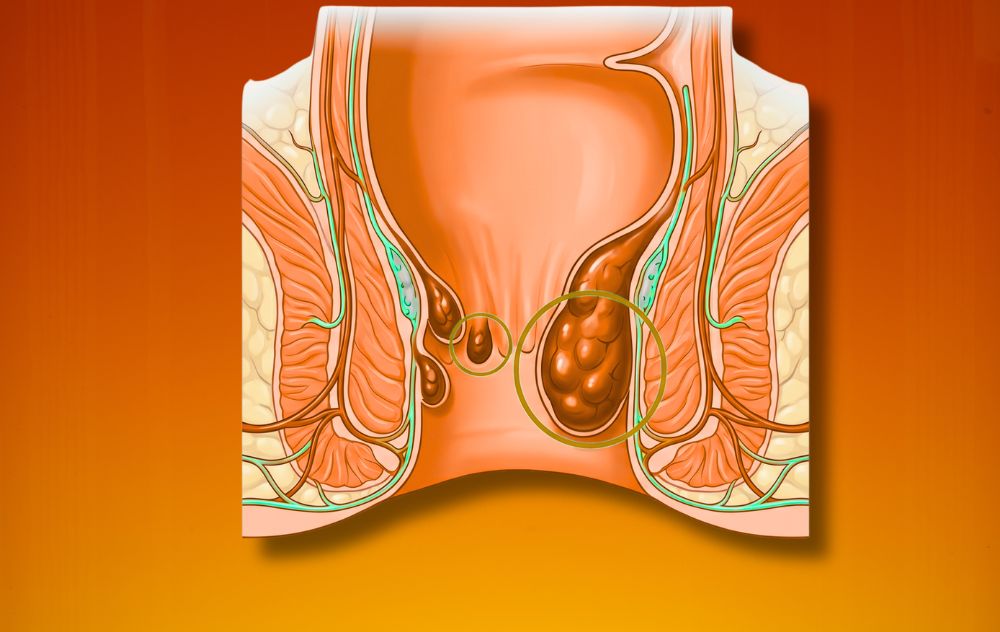
Hemorrhoids aren’t usually measured with a ruler at home. Instead, their “size” is judged by symptoms, swelling, and whether they bulge (prolapse). Small hemorrhoids tend to stay internal with mild symptoms, while larger ones often cause noticeable swelling, discomfort, or protrusion.
What Are Hemorrhoids, Really?
Hemorrhoids are swollen veins in the rectum or anus. Everyone has these veins, but they become a problem when they enlarge, stretch, or become irritated.
There are two main types:
- Internal hemorrhoids (inside the rectum)
- External hemorrhoids (under the skin around the anus)
Understanding which type you’re dealing with helps determine whether it’s “small” or “large.”
Signs of a Small Hemorrhoid
Small hemorrhoids are often early-stage or mild and may go unnoticed.
Common characteristics:
- Minimal or no pain
- Occasional light bleeding (usually bright red on toilet paper)
- No visible lump outside the anus
- Mild itching or irritation
- Symptoms come and go
For internal hemorrhoids, small ones are typically Grade I (they don’t prolapse or bulge out).
Signs of a Large Hemorrhoid
Larger hemorrhoids are more advanced and tend to cause more noticeable symptoms.
Common characteristics:
- A visible or palpable lump near the anus
- Prolapse (bulging out during bowel movements)
- Pain or discomfort when sitting or wiping
- Persistent bleeding
- Swelling that doesn’t go away easily
Internal hemorrhoids can become:
- Grade II: Prolapse but go back in on their own
- Grade III: Need to be pushed back in manually
- Grade IV: Stay outside and cannot be pushed back
External hemorrhoids can also become thrombosed (clotted), which makes them feel larger and significantly more painful.
Visual vs Symptom-Based “Size”
Here’s the key distinction patients often miss:
-
-
-
- Size isn’t just physical
- It’s about impact and behavior
Indicator Small Hemorrhoid Large Hemorrhoid Visibility Not visible Visible lump or bulge Pain Minimal or none Moderate to severe Bleeding Occasional Frequent or persistent Prolapse None Common Daily impact Mild inconvenience Disruptive - Bleeding happens repeatedly
- Symptoms last more than a week
- You’re unsure if it’s actually a hemorrhoid
-
-
Rectal bleeding can overlap with other conditions, so proper evaluation matters.
Can You Feel or See a Hemorrhoid Yourself?
External hemorrhoids may sometimes be felt as a lump near the anus, and in some cases, they can be partially seen with a mirror. Internal hemorrhoids, however, are located inside the rectum and typically cannot be seen or felt from outside the body unless they have prolapsed.
This is one of the reasons self-assessment has clear limits. A patient may have a moderate to large Grade II internal hemorrhoid and feel only occasional, minimal symptoms. On the other hand, a relatively small external hemorrhoid that becomes thrombosed can cause significant acute pain. Symptom intensity does not always correspond directly to size.
If you’re unsure whether what you’re seeing or feeling is a hemorrhoid, knowing how to tell if you have hemorrhoids can help you recognize common signs. A specialist can then confirm the diagnosis and determine the type and severity.
When to Consider Medical Evaluation
You should consider seeing a specialist if:
-
-
- The hemorrhoid is getting bigger over time
- You feel a persistent lump
- Symptoms keep returning
- Over-the-counter treatments aren’t helping
-
Taking the Next Step for Hemorrhoid Relief
Knowing whether your hemorrhoid is small or large is not something most people can determine on their own with confidence, and that uncertainty does not have to be stressful. Hemorrhoids are one of the most common conditions adults face, and there are knowledgeable specialists who can evaluate your symptoms, explain what is happening, and discuss options with you.
If you have been noticing symptoms and wondering what they mean, reaching out for a consultation is a reasonable, proactive step. You do not need to wait until things become significantly worse.
For patients dealing with internal hemorrhoids that don’t resolve, minimally invasive options like Hemorrhoid Artery Embolization (HAE) may be discussed as part of a treatment plan.
FAQ on Hemorrhoid Sizes
Hemorrhoid size varies considerably. Small Grade I internal hemorrhoids may measure only a few millimeters and remain entirely inside the rectum. At the other end, Grade IV internal hemorrhoids can be significantly larger and remain permanently prolapsed. Thrombosed external hemorrhoids can swell quickly and become quite painful, sometimes reaching the size of a marble or larger. Size depends on the type of hemorrhoid, how long it has been present, and factors like straining, diet, and blood flow to the area.
Yes, hemorrhoids can progress over time, particularly if the underlying causes, such as chronic straining, low-fiber diets, or prolonged sitting, are not addressed. A Grade I internal hemorrhoid that is not managed may gradually become Grade II or Grade III. This is one reason early evaluation and lifestyle adjustments can be helpful. Not all hemorrhoids will worsen, but it is not uncommon for symptoms to become more noticeable over months or years if contributing factors remain unchanged.
Not necessarily. Internal hemorrhoids, even when fairly large, may produce little to no pain because the tissue inside the rectum contains fewer pain receptors. External hemorrhoids, by contrast, sit in an area rich in nerve endings and can be painful even when relatively small, especially if a clot has formed. The relationship between hemorrhoid size and pain level is not always straightforward, which is another reason symptoms alone can be an incomplete measure of what is actually happening.