
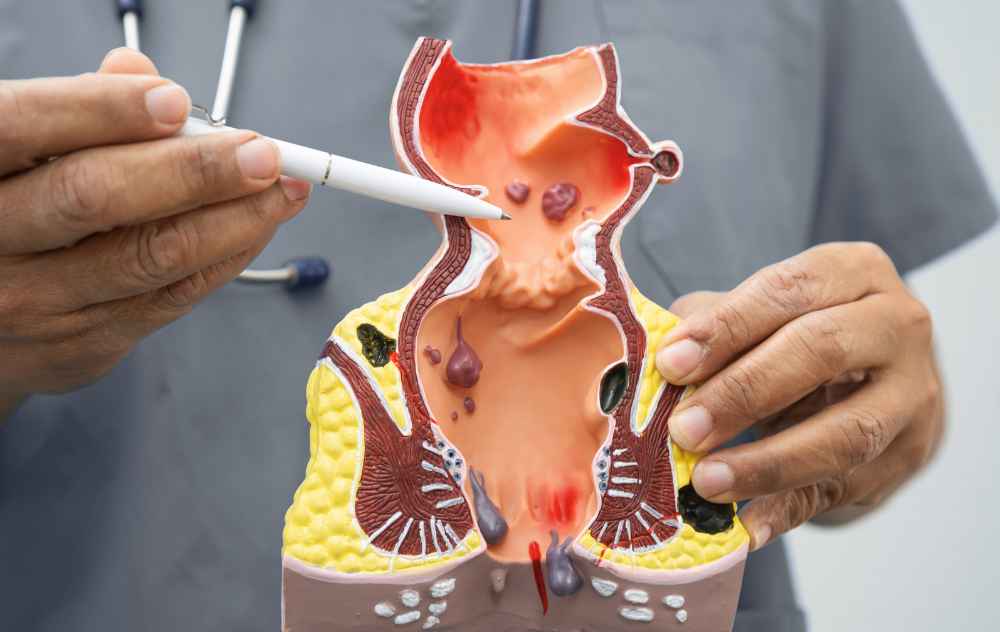
Most patients keep significant hemorrhoid relief for a year or longer after Hemorrhoid Artery Embolization (HAE). That is what peer-reviewed research on bleeding, pain, and quality of life shows. If you are trying to decide whether HAE is worth it, how long the results last is often the deciding factor.
We’ll walk through what the studies actually found, why a small number of patients need a second treatment, and how to tell if your symptoms are starting to come back. That way, you know what to expect before you book a consultation.
What the Research Shows About How Long HAE Results Last
The most detailed data comes from a 2023 study in the Journal of Vascular and Interventional Radiology. Researchers followed 134 patients who had Hemorrhoid Artery Embolization (HAE) for internal hemorrhoids. Within one month, 93 percent of patients showed real improvement in bleeding, pain, and quality of life. Only 10 of the 134 patients needed a second procedure to keep their results.
A separate study followed 221 patients for six to twelve months after treatment. It found a similar early success rate, close to 90 percent. This supports the idea that HAE’s benefits usually last well past the first few weeks.
Some European follow-up data tells a different story for a smaller group of patients. In that data, about one in four patients still had symptoms that had not improved enough after one year, even though some of them had a second procedure. This range of outcomes is normal. Results can vary based on hemorrhoid grade, your own anatomy, and how closely you follow your doctor’s guidance after treatment. That is also why your interventional radiologist checks your progress at scheduled follow-up visits.
Why Results Can Differ From Patient to Patient
No two patients heal the exact same way. A person with Grade 2 hemorrhoids and no other health issues often responds differently than someone with more advanced, Grade 4 disease. Age and overall vascular health can shift the timeline too. So can whether straining habits improve after treatment. This is normal. It is one reason your specialist reviews your imaging and history closely before setting expectations for your specific case.
How Hemorrhoid Grade Factors Into Your Outlook
Specialists often describe internal hemorrhoids using a simple grading scale from 1 to 4. Grade 1 hemorrhoids stay inside the rectum and rarely cause symptoms beyond mild bleeding. Grade 2 hemorrhoids may bulge out during a bowel movement but pull back in on their own. Grade 3 hemorrhoids push out and need to be pushed back manually. Grade 4 hemorrhoids stay outside the rectum and cannot be pushed back at all. Most of the research behind HAE’s long-term success rates comes from patients in the Grade 2 to 3 range, which is also the group where HAE tends to perform most predictably. If your hemorrhoids fall into Grade 4, your specialist may discuss how that affects your expected outlook compared to the published averages.
Why a Small Number of Patients Need a Second Treatment
Across the available studies, somewhere between 7 and 10 percent of HAE patients needed a repeat embolization within the first year. A second treatment does not mean the first one failed. A few things usually explain it. An extra small artery branch may have been feeding the hemorrhoid and still needs treatment. The hemorrhoid may have been a higher grade with a larger blood supply. Or ongoing strain from constipation may have placed new pressure on the treated area.
There is good news here. HAE does not remove or cut any tissue. A repeat procedure carries the same low-risk, outpatient profile as the first one did. There is no buildup of scar tissue or surgical damage the way there can be with repeated invasive procedures. This is one reason interventional radiologists see HAE as a reasonable option to repeat if symptoms return.
How HAE Compares to Other Hemorrhoid Treatments for Lasting Relief
Office-based banding is a common first step for internal hemorrhoids. But published research shows that close to half of banding patients need another banding treatment within twelve months. By comparison, HAE studies report a repeat-procedure rate closer to one in ten patients over a similar time frame. That gap may make HAE a more durable choice for the right candidates.
Traditional surgical hemorrhoidectomy is still used for some advanced cases. But it comes with a recovery period that can run from two to six weeks. Many patients also describe more pain after surgery than after embolization. HAE’s recovery takes just a few days. That short recovery, combined with research showing lasting results, is a major reason patients ask about HAE by name. You can read more about the benefits of HAE before your consultation.
A Quick Side-by-Side Look
Picture three patients with similar Grade 2 internal hemorrhoids. One chooses banding. One chooses surgery. One chooses HAE. The banding patient gets a quick office visit. But that patient also faces nearly even odds of needing another round within a year. The surgery patient often gets strong results. But that patient also spends weeks recovering and managing pain. The HAE patient goes home the same day. Most are back to light activity within days. And most have roughly a 90 percent chance of not needing anything further within the first year. No single option is right for every patient. But this comparison is why many people ask about HAE first.
What Can Affect How Long Your Results Last
A few factors shape how long HAE’s benefits hold up for you personally.
- Hemorrhoid grade: Grade 2 and 3 internal hemorrhoids tend to respond more predictably than heavily prolapsed, more advanced cases.
- Ongoing straining or constipation: Repeated pressure on treated tissue from chronic constipation can lead to new symptoms later, separate from how well the original procedure worked.
- Diet and hydration: Enough fiber and fluids cut down on the straining that puts renewed pressure on hemorrhoidal tissue.
- Individual blood vessel anatomy: Some patients have extra small artery branches feeding the hemorrhoid that may need treatment in a follow-up visit.
- Follow-up visits: Patients who keep their scheduled follow-up appointments tend to catch small issues early, which can support longer-lasting relief.
Signs Your Symptoms May Be Returning
Most patients do not see symptoms come back all at once. Small changes tend to build slowly. It is worth scheduling a follow-up visit with your specialist if you notice:
- Rectal bleeding that returns after a period of improvement
- Hemorrhoidal tissue that prolapses or pushes out again
- New pain or pressure during bowel movements
- Itching or irritation that had gone away and is now back
None of these signs mean HAE failed on its own. They simply mean it is time for your specialist to take another look. Your doctor can confirm what is happening with your hemorrhoid symptoms and walk you through next steps, which may include a repeat embolization or another approach based on your case.
What to Expect Before and After Your HAE Procedure
Knowing what happens around the procedure itself can help you judge how it fits into your schedule. Most consultations start with a review of your symptoms and medical history. Your specialist may also order imaging to confirm your hemorrhoid grade and map the blood vessels feeding the area. This step helps your doctor plan which artery branches to target.
On the day of the procedure, you will likely receive light sedation, not general anesthesia. Your interventional radiologist inserts a thin catheter, usually through the wrist or groin, and guides it to the arteries supplying the hemorrhoid using live imaging. Small particles are then placed to reduce blood flow to the area. The procedure itself often takes about one to two hours, and most patients go home the same day with only a small bandage at the access site.
In the days after treatment, mild discomfort or light spotting is common and usually fades on its own. Most patients resume normal, non-strenuous activities within a few days. Your care team will typically schedule a follow-up visit around the one-month mark to check your progress, which lines up with when most clinical studies also measure early results. Bringing a list of your symptoms and any questions to that first visit can help you get the most out of the conversation.
Treatment option: hemorrhoid artery embolization
Hemorrhoid relief that is backed by research, not just reassurance.
Fiber, water, and less straining can ease mild symptoms. But they will not fix hemorrhoids that are already bleeding, prolapsing, or causing ongoing discomfort. If conservative steps have not worked, it may be time to ask whether Hemorrhoid Artery Embolization is your right next step.
USA Hemorrhoid Centers offers HAE as an outpatient, minimally invasive procedure performed by experienced interventional radiologists. Most patients go home the same day and return to normal activities within a few days. The first step is a consultation to review your symptoms and talk through what to expect.
Frequently Ask Questions About How Long HAE Lasts
- Bagla S, Pavidapha A, Lerner J, et al. Outcomes of Hemorrhoidal Artery Embolization from a Multidisciplinary Outpatient Interventional Center. J Vasc Interv Radiol. 2023;34(5):745-749. doi:10.1016/j.jvir.2023.01.023.
- Journal of Vascular and Interventional Radiology / Society of Interventional Radiology Annual Scientific Meeting. Long-Term Efficacy of Hemorrhoid Artery Embolization in an Outpatient Multidisciplinary Center: A Review of 221 Patients. Abstract No. 3, 2024.
- Endovascular Today. Hemorrhoid Embolization: Does It Last? April 2018. https://evtoday.com/articles/2018-apr/hemorrhoid-embolization-does-it-last
- Journal of Vascular and Interventional Radiology (via ScienceDirect). Outcomes of Hemorrhoidal Artery Embolization from a Multidisciplinary Outpatient Interventional Center. February 2023. https://www.sciencedirect.com/science/article/abs/pii/S1051044323001124
- National Institute of Diabetes and Digestive and Kidney Diseases. Hemorrhoids: Definition and Facts. Updated November 2016.
Medical disclaimer: This content is for informational purposes only and is not a substitute for professional medical advice, diagnosis, or treatment. Always seek the guidance of a qualified healthcare provider with any questions you may have regarding a medical condition.