
Medically reviewed by
USA Hemorrhoid Centers Medical Review Team
Experienced physicians specializing in hemorrhoid treatment
Reviewed: November 2026
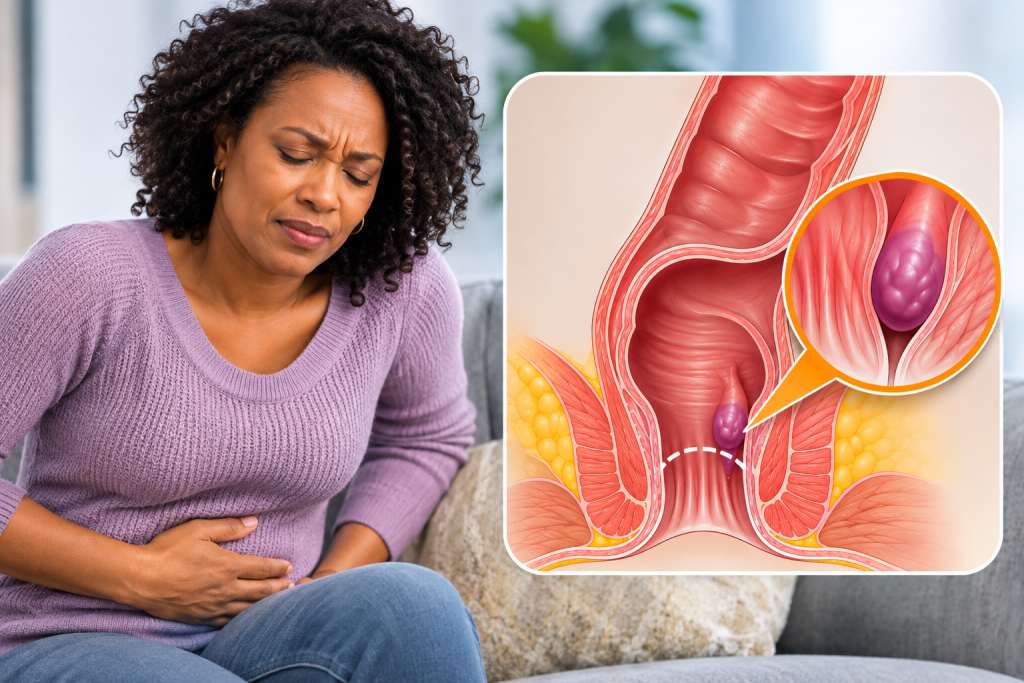
Hemorrhoids look different depending on their type. Internal hemorrhoids form inside the rectum and are usually not visible – but they often cause bright red rectal bleeding. External hemorrhoids develop around the outer edge of the anus and may appear as raised lumps or areas of swelling near the anal opening. If a blood clot forms inside one, the texture becomes firm and the color shifts to dark blue or purple. This guide covers how each type looks, how to tell if what you have is a hemorrhoid, and what may be confused with one.
We cover the appearance of each hemorrhoid type, the grading system specialists use to describe severity, three conditions that are commonly confused with hemorrhoids, and the signs that point toward a specialist evaluation.
What and Where Hemorrhoids Actually Are
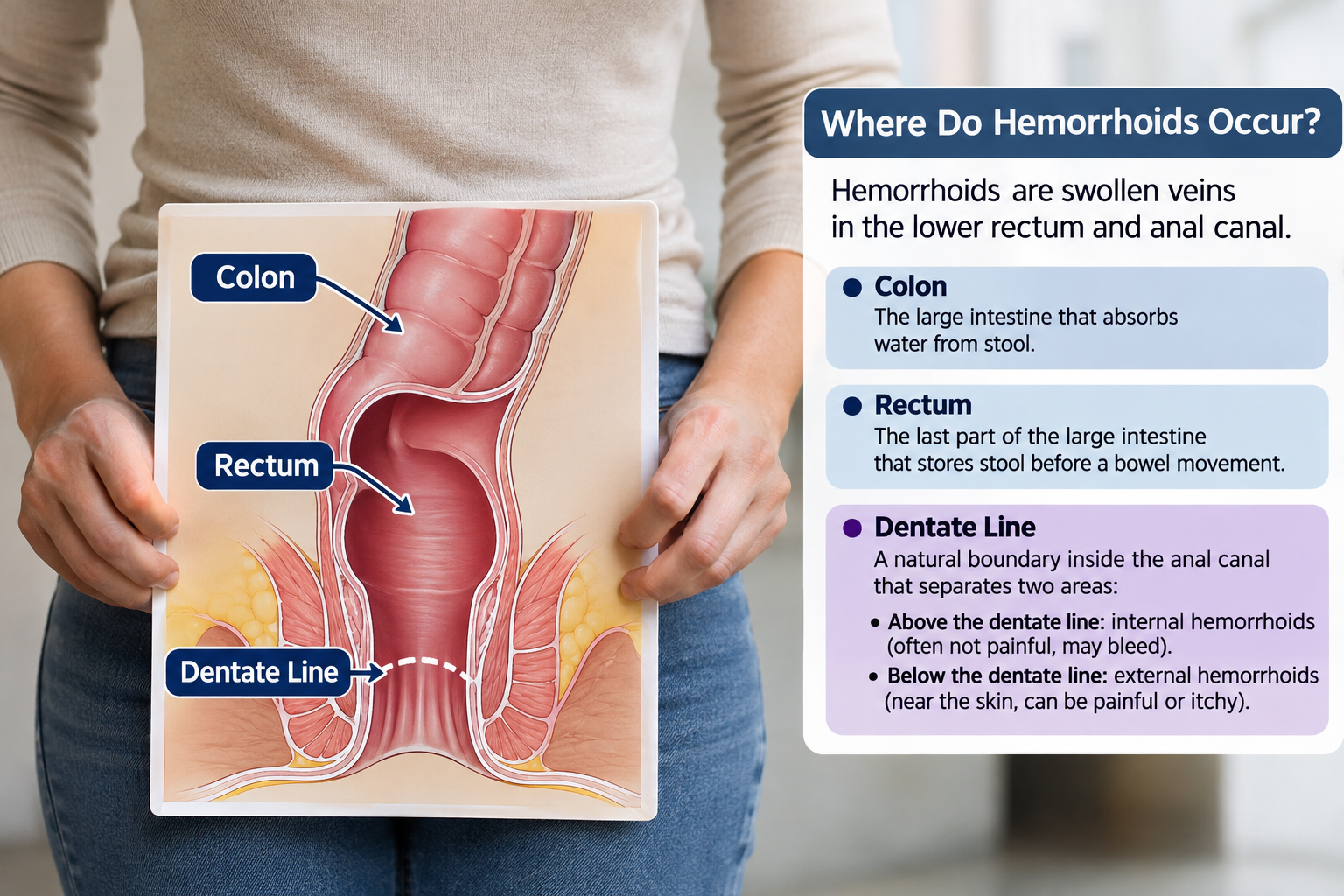
Hemorrhoids are vascular cushions in the lower rectum and anal canal that everyone has. They support bowel control. When increased pressure causes these cushions to dilate, swell, and stretch, they become symptomatic – causing bleeding, prolapse, irritation, or discomfort.
The most important distinction is location. Internal hemorrhoids form inside the rectum, above a boundary called the dentate line. External hemorrhoids form under the skin around the anus, below that line. That boundary explains much of what you feel and see. Above the dentate line, nerves that sense pain are sparse, so internal hemorrhoids often do not hurt. Below it, skin has rich nerve coverage, making external hemorrhoids more likely to cause pain and itching.
Hemorrhoids affect roughly 1 in 5 adults.[1] Prevalence peaks between ages 45 and 65, though they can develop at any age, particularly during pregnancy or periods of prolonged straining.
What Internal Hemorrhoids Look Like
Internal hemorrhoids are not visible from outside the body in most cases. They are located inside the rectum, where the mucosal lining covers them entirely. The first sign a patient often notices is bright red blood – seen on toilet paper, in the bowl, or coating the surface of a stool during a bowel movement. This bleeding happens because the thin rectal lining is fragile and may be disrupted during straining. You can read more about how much bleeding is normal for hemorrhoids and when it needs evaluation.
Prolapsed Internal Hemorrhoids
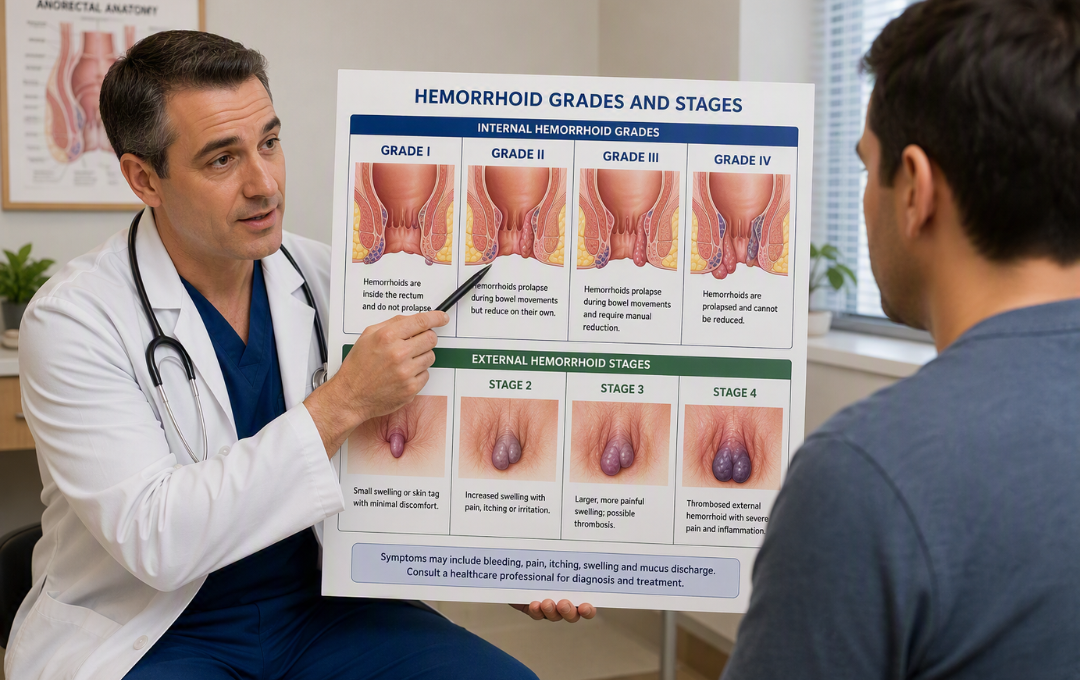
When an internal hemorrhoid swells enough to push through the anal opening, it is called prolapsed. At that point, it becomes visible – appearing as moist, pinkish or reddish soft tissue protruding from the anus. Prolapsed tissue may retract on its own (Grade 2), require manual reduction (Grade 3), or remain permanently outside the anal canal (Grade 4). The tissue often looks like a small, soft bulge and may cause a feeling of pressure, mucus discharge, or discomfort.
What External Hemorrhoids Look Like
External hemorrhoids develop under the skin around the anus and appear as raised lumps or areas of swelling near the anal opening. Unlike prolapsed internal hemorrhoids, they are covered by skin rather than moist rectal tissue.
External hemorrhoids are often flesh-colored, red, or slightly bluish. They may appear as one lump or several small bumps around the edge of the anus. When a blood clot forms, the hemorrhoid can become firm, swollen, and dark purple or blue.
Thrombosed External Hemorrhoids
A thrombosed hemorrhoid forms when a blood clot develops inside an external hemorrhoid. The color becomes dark blue, purple, or nearly black. The texture shifts from soft to firm or hard. Swelling can reach the size of a marble or larger. Pain is typically sudden, severe, and constant – peaking within 48 to 72 hours before gradually subsiding as the clot begins to dissolve.[2] Thrombosed hemorrhoids are one of the most visually distinct presentations and among the most uncomfortable.
Understanding Hemorrhoid Grades
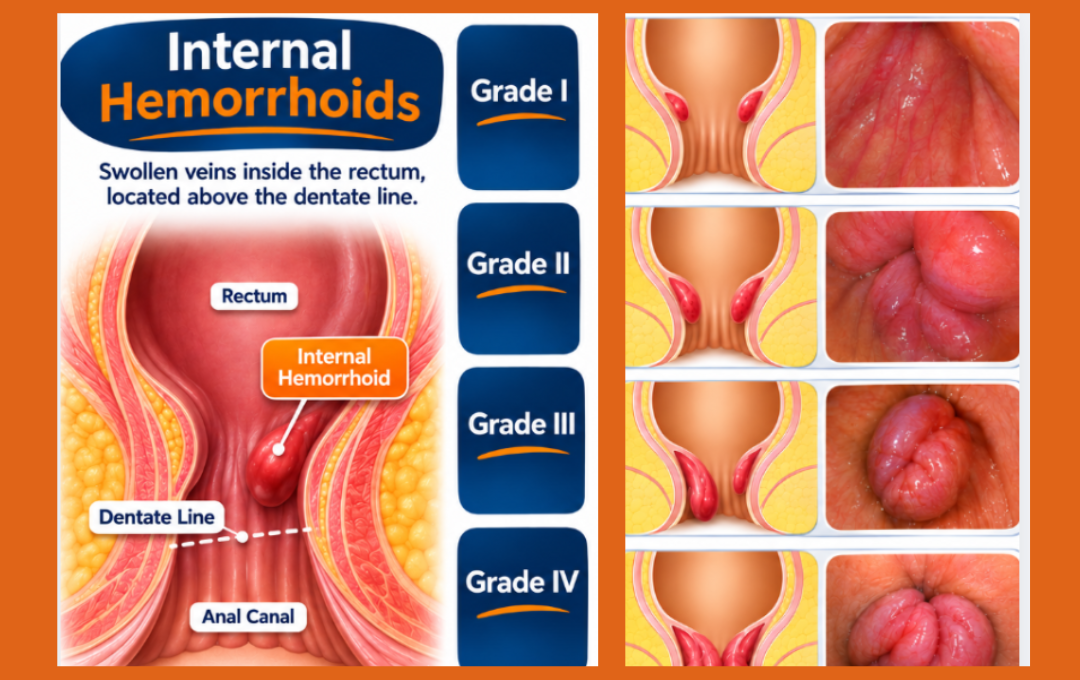
Internal hemorrhoids are classified by grade based on how far they protrude:
Grade 1: Remains inside the rectum. No prolapse. Not visible. The main symptom is typically painless bleeding, often noticed as bright red blood on toilet paper or in the bowl.
Grade 2: Prolapses during straining or a bowel movement but retracts on its own. May not be consistently visible. Can cause intermittent discomfort and bleeding.
Grade 3: Prolapse that must be manually pushed back in. Visible during bowel movements. May cause persistent discomfort, bleeding, and mucus discharge.
Grade 4: Permanently prolapsed. Tissue remains outside the anal opening at all times. Causes ongoing discomfort, bleeding, and in some cases pain.
Knowing the grade matters for understanding whether a minimally invasive option like Hemorrhoid Artery Embolization may be appropriate. A specialist evaluation is needed to confirm grade and severity.
How to Tell If It Is a Hemorrhoid
Not every symptom near the anus comes from a hemorrhoid. These are the signs that most strongly suggest hemorrhoidal disease:
- Bright red blood on toilet paper, coating stool, or in the toilet bowl after a bowel movement
- A feeling of incomplete emptying after using the toilet
- Itching, mucus discharge, or irritation around the anal opening
- A soft lump that appears during straining and may or may not retract
- Persistent discomfort or pressure in the rectal area
Internal hemorrhoids often produce no visible sign – only bleeding. External hemorrhoids produce a visible or palpable lump. If bleeding is dark, mixed throughout the stool, or happens without bowel movements, that pattern does not match typical hemorrhoid bleeding and needs prompt evaluation. Learning more about hemorrhoid symptoms can help frame what a specialist will look for during an evaluation.
What Is Commonly Mistaken for a Hemorrhoid
Several conditions can look or feel like a hemorrhoid. Because self-diagnosis has clear limits, understanding these differences supports a more informed conversation with a specialist.
Anal Skin Tags
Skin tags are small, soft folds of skin that commonly develop after a previous external hemorrhoid has resolved and the swelling has gone down. They are typically flesh-colored or slightly darker, painless unless irritated, and do not bleed or change size over time. An active hemorrhoid is more likely to be swollen, tender, or cause bleeding. If you are unsure whether a lump is a skin tag or an active hemorrhoid, a brief specialist exam can confirm it.
Anal Fissures
An anal fissure is a small tear in the lining of the anal canal. It causes sharp, burning pain during and immediately after a bowel movement – often alongside a small amount of bright red bleeding. The pain pattern differs from hemorrhoids: more acute and specifically linked to the act of passing stool. External hemorrhoids may cause discomfort too, but typically produce a more constant soreness rather than a sharp, tear-related burning sensation.
Rectal Prolapse
Rectal prolapse occurs when part of the rectal wall slides outside the anus. It can appear visually similar to a Grade 3 or Grade 4 prolapsed internal hemorrhoid, but typically involves a larger, more prominent mass with visible concentric tissue folds rather than a smooth, localized lump. A specialist examination is needed to distinguish between the two, as the management approach differs. Other conditions that cause rectal bleeding – including polyps and colorectal conditions – may also overlap symptomatically with hemorrhoids, reinforcing why persistent bleeding should be evaluated rather than assumed to be from hemorrhoids alone.
When to See a Hemorrhoid Specialist
Schedule an evaluation if you notice:
- Rectal bleeding that is new, recurring, or lasting more than a week
- A lump or mass near the anus that does not resolve
- Pain during bowel movements that is worsening
- Tissue that prolapses and cannot be manually reduced
- Symptoms that interfere with daily activity or quality of life
For internal hemorrhoids specifically, diagnosis requires a clinical exam – often including an anoscopy, a brief and well-tolerated outpatient procedure that allows a specialist to view the anal canal directly. A visual appearance or a lump alone is not sufficient for a diagnosis; clinical confirmation is important both to identify the type and grade of hemorrhoid and to rule out other causes.
Can USA Hemorrhoid Centers Help?
If your symptoms are consistent with internal hemorrhoids, USA Hemorrhoid Centers offers Hemorrhoid Artery Embolization (HAE), a minimally invasive, outpatient procedure performed by experienced interventional radiologists. HAE works by reducing blood flow to the hemorrhoidal tissue, allowing it to gradually shrink without surgery, general anesthesia, or an overnight stay. HAE addresses internal hemorrhoids specifically. External hemorrhoids are managed separately by colorectal specialists.
The first step is a consultation to evaluate your symptoms, confirm the type and grade of hemorrhoid present, and discuss whether HAE may be a fit for your situation.
Treatment option: hemorrhoid artery embolization
Symptoms like rectal bleeding and prolapse deserve a clinical answer, not a guess.
Knowing what a hemorrhoid looks like is a helpful first step, but it does not replace a diagnosis. The appearance of a lump or the presence of bleeding can be caused by several conditions, and only a specialist evaluation can confirm what is behind your symptoms.
USA Hemorrhoid Centers offers minimally invasive, outpatient care for internal hemorrhoids performed by experienced interventional radiologists. If a confirmed internal hemorrhoid is driving your symptoms, Hemorrhoid Artery Embolization may be an option worth evaluating. The first step is a brief consultation to assess what is involved.
Frequently asked questions
- Kim SY, et al. “Risk factors for hemorrhoidal disease among healthy young and middle-aged Korean adults.” Scientific Reports, January 7, 2022. https://www.nature.com/articles/s41598-021-03838-z
- Mott T, et al. “Hemorrhoids: Diagnosis and Treatment Options.” American Family Physician. 2018;97(3):172-179.
- Mayo Clinic. “Hemorrhoids – Symptoms and Causes.” mayoclinic.org/diseases-conditions/hemorrhoids/symptoms-causes/syc-20360268
Medical disclaimer: This article provides educational information about internal hemorrhoids and treatment options. It is not a diagnosis or medical advice. Only a qualified hemorrhoid specialist can determine whether you have internal hemorrhoids or recommend appropriate treatment. If you experience rectal bleeding or other symptoms, consult a healthcare provider or contact USA Hemorrhoid Centers.