
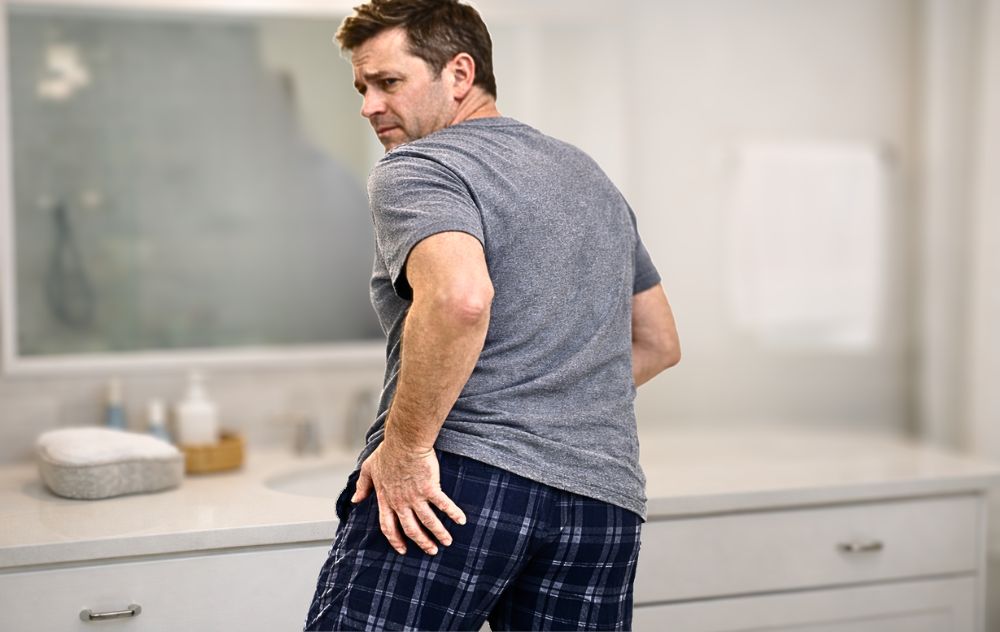
Can hemorrhoids cause tenderness without bleeding is a common question, especially for people who notice soreness, pressure, or discomfort without seeing blood. Yes, hemorrhoids can cause tenderness without bleeding. In many cases, people notice irritation, pain, or sensitivity near the anus before any bleeding occurs. This is especially common with external hemorrhoids, which develop under the skin around the anus and can become tender when sitting, wiping, or having a bowel movement. Internal hemorrhoids are more likely to bleed and are often painless unless they become irritated or prolapse.
If you are dealing with tender hemorrhoids without bleeding, it can still be a sign that the swollen vein is irritated or inflamed. While some hemorrhoid symptoms improve with conservative care, persistent tenderness, worsening pain, or recurring flare-ups may mean it is time for a medical evaluation.
Why Hemorrhoids Can Feel Tender Even if There Is No Bleeding
Not all hemorrhoids bleed. The symptoms depend on the type of hemorrhoid and how irritated it has become. External hemorrhoids may cause anal itching, hard tender lumps near the anus, and anal ache or pain, especially when sitting. By contrast, internal hemorrhoids are more often associated with bright red rectal bleeding and are usually less painful.
That means you may feel:
- tenderness near the anus
- pain when sitting
- soreness after a bowel movement
- irritation when cleaning the area
- a small lump or swelling near the anus
These symptoms can happen even when there is no visible blood.
Hemorrhoid Symptom Information
Are Tender Hemorrhoids Usually Internal or External?
Tenderness without bleeding is more commonly linked to external hemorrhoids. Because they develop under the sensitive skin around the anus, they are more likely to cause discomfort, especially during a flare-up. Internal hemorrhoids are usually inside the rectum, so they tend to be less painful, though they may bleed.
If the tenderness becomes sudden and severe, it could point to a thrombosed external hemorrhoid, which happens when a blood clot forms inside an external hemorrhoid. This can cause significant pain and a painful anal mass. Bleeding may only happen if the skin over the clot opens.
It is also important to note Tenderness does not always mean the problem is an external hemorrhoid. While external hemorrhoids are more commonly linked to pain and soreness, prolapsed internal hemorrhoids can also cause discomfort, pressure, and irritation, especially when hemorrhoidal tissue pushes outside the anus. NIDDK notes that prolapsed internal hemorrhoids may cause pain and discomfort.
That is one reason it is important to get checked instead of assuming the source of tenderness on your own. A prolapsed internal hemorrhoid may feel like tissue on the outside, which can make it easy to confuse with an external hemorrhoid. However, they are not the same thing, and the distinction matters when discussing the next step in care
What Does Hemorrhoid Tenderness Feel Like?
People describe hemorrhoid tenderness in different ways. Some say it feels like soreness or rawness. Others notice a dull ache, pressure, or discomfort that gets worse when sitting for long periods.
Common descriptions include:
- a tender lump near the anus
- discomfort when wiping
- pain when sitting on hard surfaces
- a swollen feeling after bowel movements
- irritation that comes and goes throughout the day
External hemorrhoids may also feel more noticeable after straining, constipation, diarrhea, or prolonged sitting, since these factors can increase pressure and irritation in the area. Straining and excessive rubbing or cleaning can also make symptoms worse.
Can Hemorrhoids Hurt Without Any Other Symptoms?
Yes. Some hemorrhoids cause tenderness before other symptoms appear. You may not have bleeding, itching, or obvious swelling at first. In mild cases, tenderness may be the main symptom. In other cases, the discomfort may come with pressure, a feeling of fullness, or sensitivity during bowel movements.
However, hemorrhoids are not the only cause of anal or rectal tenderness. Anal pain can also have other causes, including anal fissures and other anorectal conditions. That is one reason ongoing symptoms should not be self-diagnosed for too long.
When Tenderness May Mean Something More Serious
Tender hemorrhoids are not always an emergency, but some symptoms should not be ignored. If bleeding develops along with the tenderness, knowing how much hemorrhoid bleeding is normal can help you recognize when it may need medical attention. You should seek prompt medical care if you have:
- severe anal pain
- heavy or persistent rectal bleeding
- worsening swelling
- fever
- abdominal pain along with rectal symptoms
- mucus, pus, or other unusual discharge
- symptoms that do not improve
How Doctors Diagnose Hemorrhoids
A doctor can often diagnose external hemorrhoids by examining the area around the anus. If internal hemorrhoids are suspected, diagnosis may also include a digital rectal exam or a procedure to look inside the anus and rectum.
This matters because tenderness without bleeding can overlap with other conditions. A proper diagnosis can help rule out other causes of pain and determine whether you have internal hemorrhoids, external hemorrhoids, or another issue entirely.
When to See a Hemorrhoid Specialist
You should consider seeing a specialist if:
- tenderness lasts more than a few days
- symptoms keep coming back
- sitting is becoming uncomfortable
- over-the-counter remedies are not helping
- you feel a painful lump near the anus
- you are unsure whether hemorrhoids are causing your symptoms
A medical evaluation can help determine the next step and prevent you from treating the wrong condition.
Find a Hemorrhoid Center Near You
Treatment Options for Persistent Hemorrhoid Symptoms
When hemorrhoid symptoms do not improve with conservative care, treatment depends on whether the hemorrhoids are internal or external and how severe the symptoms are.
At USA Hemorrhoid Centers, we focus on Hemorrhoid Artery Embolization, or HAE, for appropriate cases of symptomatic internal hemorrhoids. HAE is a minimally invasive, nonsurgical procedure designed to reduce blood flow to the hemorrhoids. It is important to note that HAE is used for qualifying internal hemorrhoid cases and is not a treatment for external hemorrhoids, thrombosed external hemorrhoids, or every source of anal pain.
Because of that, patients with tenderness without bleeding should first receive an accurate diagnosis to determine whether hemorrhoids are the cause and whether the symptoms involve internal hemorrhoids, external hemorrhoids, or another anorectal condition.
Find Relief With USA Hemorrhoid Centers
If you have been asking whether hemorrhoids can cause tenderness without bleeding, the answer is yes. Tenderness can be a real hemorrhoid symptom, especially with external hemorrhoids, even when there is no visible blood. But because other anorectal conditions can cause similar discomfort, persistent or worsening symptoms should be evaluated by a medical professional.
At USA Hemorrhoid Centers, our specialists evaluate symptoms and determine whether a patient may be a candidate for HAE treatment for internal hemorrhoids. If hemorrhoid-related symptoms are interfering with your comfort, daily routine, or bowel movements, scheduling a consultation can help you get clarity on the cause and next steps.