

Medically reviewed by
USA Clinics Medical Review Team
Interventional Radiologists and Hemorrhoid Specialists
Reviewed October 2026
Taking short, gentle walks may help ease hemorrhoid symptoms by stimulating circulation and keeping your digestion moving smoothly. This light activity can help relieve strain on swollen rectal veins, though finding the right balance between movement and rest matters.
We will walk through how low-impact exercise supports relief, which habits to avoid during flare-ups, and when it is time to discuss lasting treatment options with a hemorrhoid specialist.
Is Walking Good for Hemorrhoids?
Yes. For most people, gentle walking is a safe and helpful habit while managing hemorrhoid symptoms. Walking is low-impact, so it does not put heavy strain on the rectal area the way some other activities can. It also supports two things that matter most for hemorrhoid relief: steady blood flow and regular bowel movements.
Walking will not make hemorrhoids disappear on its own. It works best as one part of a larger plan that may include more fiber, more water, and better bathroom habits. Think of walking as support, not a stand-alone fix.
How Walking Helps Manage Hemorrhoid Symptoms

Walking offers a few specific benefits for people managing hemorrhoid symptoms:
- Improves circulation. Movement helps blood flow more evenly through the body, including the pelvic area. Better circulation may help reduce swelling in the hemorrhoidal veins.
- Supports a healthy weight. Extra weight adds pressure on the rectal veins. Regular walking is a low-impact way to help manage weight over time.
- Eases constipation. Gentle movement can help keep digestion moving, which may reduce the straining that often triggers or worsens hemorrhoid symptoms.
- Reduces stress. Exercise supports mood and lowers stress, which can indirectly support healthy bowel habits.
How to Walk Safely During a Hemorrhoid Flare-Up
Walking during a flare-up calls for a gentler approach than your usual routine:
- Start short. Begin with walks of 15 to 20 minutes at a comfortable, easy pace.
- Skip the intensity. Avoid long-distance or brisk power walking while symptoms are active, since sustained impact can make swelling worse.
- Listen to your body. If a walk increases pain or discomfort, stop and rest. Pain is a signal, not something to push through.
- Pair walking with other habits. Combine gentle movement with more fiber and more water to support the bowel habits that help reduce flare-ups.
What Not to Do During a Hemorrhoid Flare-Up

Some everyday habits add pressure to already swollen veins and can slow healing. During a flare-up, it is generally best to avoid:
- Heavy lifting, which increases abdominal pressure
- Sitting on the toilet longer than needed
- High-intensity workouts, cycling, or heavy weightlifting
- Straining during bowel movements
A closer look at the full list of everyday activities to avoid with hemorrhoids can help you spot other habits worth adjusting while symptoms settle.
When Walking Is Not Enough: Signs to See a Hemorrhoid Specialist
Walking and lifestyle changes help many people manage mild symptoms, but some signs mean it is time to pause and seek care rather than keep waiting it out. Reach out to a specialist if you notice:
- Heavy or ongoing rectal bleeding
- Sharp, severe, or debilitating pain
- A prolapse that will not go back in on its own
- Symptoms that last longer than a week despite home care
Recurring or chronic hemorrhoid symptoms often point to a deeper vascular issue that diet and lifestyle changes alone cannot fully resolve. A review of common hemorrhoid warning signs can help you recognize when symptoms have moved beyond what home care can manage.
Can USA Hemorrhoid Centers Help?
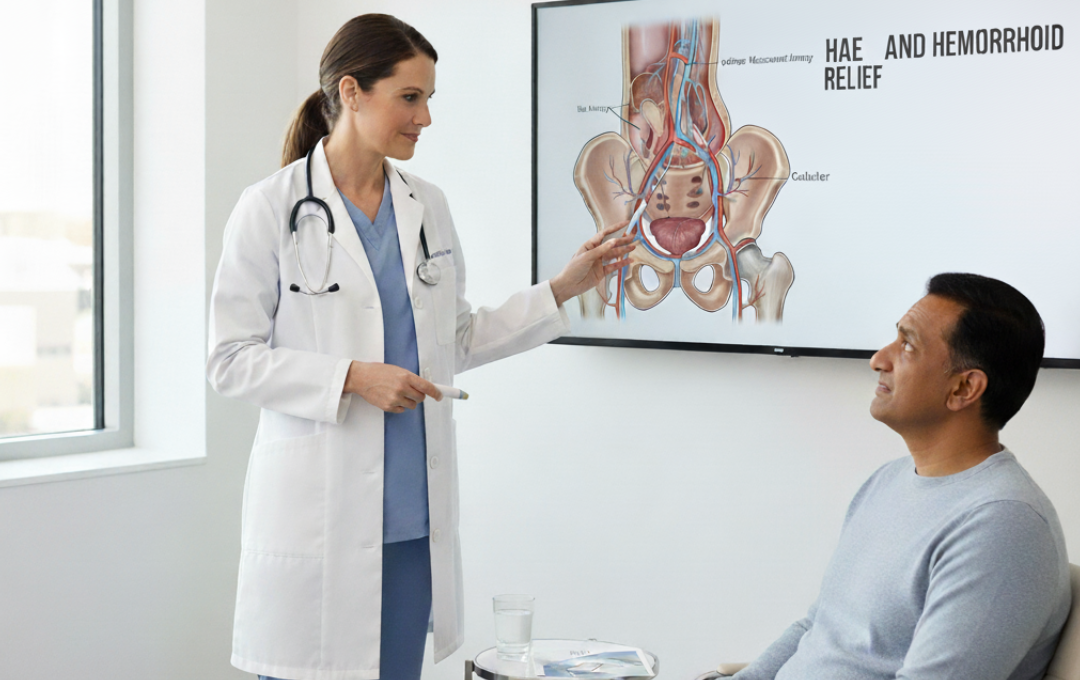
When lifestyle changes are not enough, hemorrhoid artery embolization (HAE) is a minimally invasive option worth discussing with a specialist. HAE is performed in an outpatient setting by an experienced interventional radiologist, who precisely reduces blood flow to the swollen hemorrhoidal veins so the tissue can shrink over time.
At USA Hemorrhoid Centers, evaluation is performed by experienced specialists who review your symptoms and history before recommending next steps. Most patients return to normal activities quickly, without the recovery time associated with surgical options.
Treatment option: hemorrhoid treatment
Walking Helps. But It Does Not Treat the Underlying Veins.
Fiber, water, and gentle movement can ease day-to-day discomfort, but they do not resolve swollen hemorrhoidal tissue on their own. If you are dealing with persistent bleeding, prolapse, or pain that is not improving, lifestyle changes alone are unlikely to be the full answer.
USA Hemorrhoid Centers offers hemorrhoid artery embolization, a minimally invasive, outpatient procedure performed by experienced specialists. The first step is a consultation to review your symptoms and talk through the options that fit your situation.
Frequently Asked Questions
- National Institute of Diabetes and Digestive and Kidney Diseases. Hemorrhoids. https://www.niddk.nih.gov/health-information/digestive-diseases/hemorrhoids
- American Society of Colon and Rectal Surgeons. Hemorrhoids, Expanded Information. https://fascrs.org/patients/diseases-and-conditions/a-z/hemorrhoids
- GoodRx Health. 6 Exercises to Manage Hemorrhoids, and What to Avoid. https://www.goodrx.com/well-being/movement-exercise/exercises-for-hemorrhoids
Medical disclaimer: This content is for informational purposes only and is not a substitute for professional medical advice, diagnosis, or treatment. Always seek the guidance of a qualified healthcare provider with any questions you may have regarding a medical condition.