
The American Cancer Society (ACS) recently released an important update in Newswise in regard to its colorectal cancer screening guidelines. The new recommendations reaffirm that adults at average risk should begin regular screenings at age 45. However, in a major shift to lower barriers to preventive care, the ACS has expanded its recommended “arsenal” to include new at-home stool tests (such as ColoSense) and blood-based screening options (such as Shield).
This update comes at a critical time. Recent ACS research highlights a concerning trend: colorectal cancer has become the top cancer killer for adults under the age of 50.
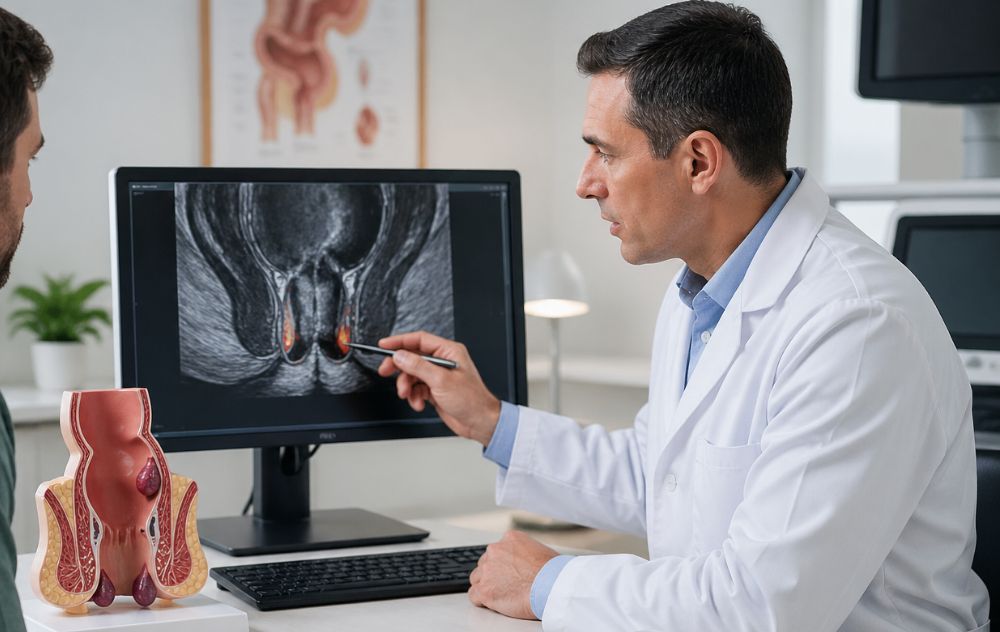
At USA Hemorrhoid Centers, we believe this news serves as a vital reminder for anyone experiencing rectal bleeding. Too often, people notice blood in the toilet or on their wipe and dismiss it as a temporary flare-up of hemorrhoids. While hemorrhoids are incredibly common, assuming they are the sole cause of rectal bleeding can be a dangerous mistake.
The Common Denominator: Rectal Bleeding
It is important to clarify a frequent medical misconception: hemorrhoids do not turn into anal or colorectal cancer. They are structurally distinct issues—hemorrhoids are swollen, inflamed veins in the lower rectum or anus, whereas cancers involve abnormal cell growth.
However, they share identical warning signs. Both conditions can present as:
- Bright red blood in the stool or on toilet tissue
- Anal discomfort or itching
- A feeling of fullness or a lump near the anal opening
Because the symptoms overlap so closely, it is impossible to accurately self-diagnose the root cause of rectal bleeding at home. Seeing a specialist ensures that benign conditions like hemorrhoids are treated properly, while more serious issues are safely ruled out.
What the New ACS Guidelines Mean for You
The gold standard for detecting colorectal cancer or precancerous polyps remains a visual exam, such as a colonoscopy. However, the ACS expanded its guidelines because the most effective screening test is the one a patient actually completes.
The updated guidelines now feature a variety of non-invasive options for average-risk adults:
- Next-Generation At-Home Stool Tests: Updated options like Cologuard and the new ColoSense test look for hidden blood and specific molecular markers in stool samples every 3 years.
- Blood-Based Screening: Tests like Shield look for tumor DNA in the blood and are recommended for individuals who otherwise decline preferred stool or visual tests.
Crucial Note from the Guidelines: The ACS explicitly notes that if an at-home stool test or blood test comes back with a positive result, it must be followed up promptly with a colonoscopy (preferably within 6 months) to ensure patient safety.
When to See a Specialist
If you are experiencing rectal bleeding, pain, or changes in your bowel habits, do not wait for your next scheduled age-based cancer screening. You should be evaluated by a medical professional if you experience:
- Persistent bleeding that doesn’t resolve within a few days
- Chronic anal itching or pain that interferes with daily life
- Bleeding accompanied by unexplained weight loss or severe abdominal cramps
If your medical evaluation confirms that your bleeding is caused by advanced internal hemorrhoids, you don’t have to live with the discomfort or the anxiety of chronic spotting. You also don’t have to face the painful recovery of traditional surgery.
Hemorrhoid Artery Embolization Provides Effective Relief
At USA Hemorrhoid Centers, our expert interventional radiologists treat grade 2 and 3 internal hemorrhoids using Hemorrhoid Artery Embolization (HAE). This is an advanced, non-surgical outpatient procedure that targets the problem at its source.
During the 45-minute procedure, a specialized physician uses advanced imaging to guide a tiny catheter to the blood vessels feeding the hemorrhoids, placing microscopic coils or particles to reduce the blood supply. This causes the hemorrhoids to shrink and eliminates painful bleeding and itching—all without requiring general anesthesia, stitches, or the creation of an open rectal wound. Most patients are back to their normal routines within just a few days.
Don’t guess when it comes to your pelvic health. Take control of your symptoms, rule out more serious conditions, and gain true peace of mind.