
Medically reviewed by
USA Clinics Medical Review Team
Reviewed October 2026
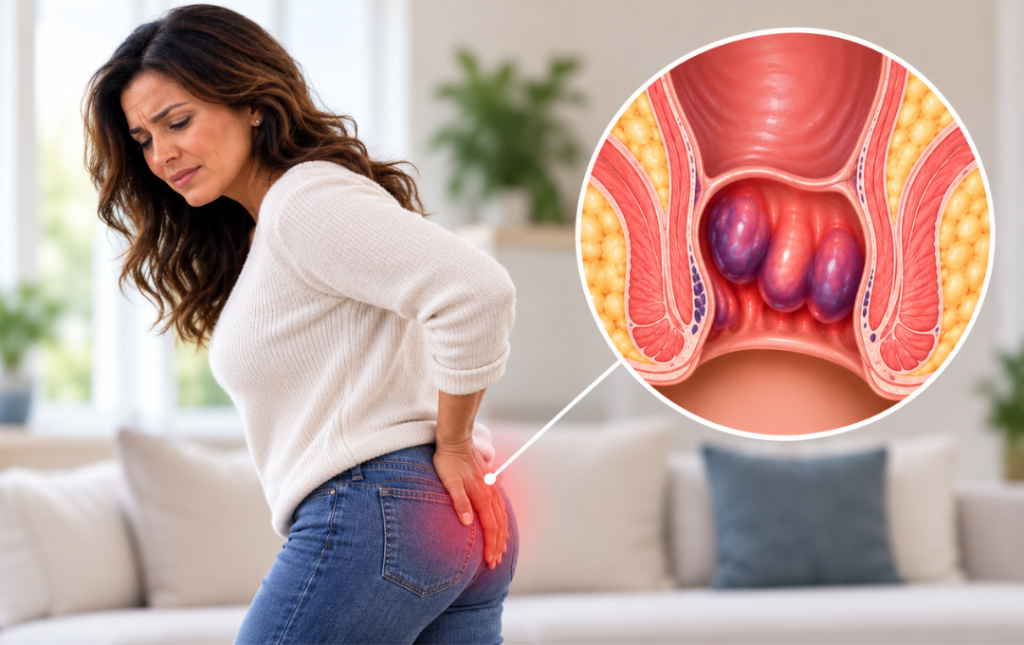
Internal hemorrhoids form when the veins inside the rectum swell due to increased pressure. Straining during bowel movements, pregnancy, chronic constipation, and prolonged sitting are the primary causes. While internal hemorrhoids are common, manageable, and rarely indicative of a severe condition on their own, understanding their symptoms is essential for proper management.
Below is an overview of what triggers internal hemorrhoids, how early signs differ from other conditions, and answers to common patient questions regarding bathroom habits and symptom duration.
What Are Internal Hemorrhoids?
Hemorrhoids are cushions of blood vessels and tissue inside the rectum that help control bowel movements. Everyone has them. They only become a problem, known as hemorrhoidal disease, when the veins inside swell and become irritated. Internal hemorrhoids sit above the anal canal, in an area with very few pain nerves. That is why they rarely hurt, even though they can bleed. Unlike external hemorrhoids, which form under the skin around the anus, internal hemorrhoids are not visible unless they prolapse, or push through the anal opening.1
What Causes Internal Hemorrhoids to Develop?
Internal hemorrhoids develop when ongoing pressure builds up in the veins of the lower rectum. That pressure can come from several everyday habits and life stages.
Straining and Constipation
Straining during a bowel movement is one of the most common causes of internal hemorrhoids. Hard stools from constipation force the rectal veins to stretch and swell. Frequent diarrhea can have a similar effect.2
Low-Fiber Diet and Dehydration
A diet low in fiber makes stool harder and more difficult to pass. Not drinking enough water adds to the problem. Both factors increase straining, which raises pressure on the veins in the rectum.
Pregnancy and Added Abdominal Pressure
A growing uterus places direct pressure on the pelvic veins. Hormonal changes during pregnancy can also slow digestion, which can lead to constipation. This combination is why internal hemorrhoids are common during pregnancy and shortly after delivery.
Prolonged Sitting
Sitting for long stretches, especially on the toilet, lets blood pool in the rectal veins. Scrolling on a phone while sitting on the toilet can extend this pressure without a person realizing it.
Aging and Weakened Tissue
As people age, the tissue that supports the rectal veins can weaken and stretch. This makes prolapsed hemorrhoids more likely later in life, even without one specific trigger.
Early Signs and Symptoms You May Notice
Internal hemorrhoids often cause few or no symptoms at first. When symptoms do appear, the most common signs include:
- Bright red blood on toilet paper or in the toilet bowl
- A feeling of fullness or pressure in the rectum
- Mild itching or irritation from mucus discharge
- Tissue that slips out of the anus during or after a bowel movement, known as prolapse3
Rectal bleeding should always be checked by a doctor, since other conditions can cause similar symptoms.
Can You Still Have Bowel Movements With Internal Hemorrhoids?
Yes. Internal hemorrhoids do not block or prevent bowel movements. Most people with internal hemorrhoids pass stool normally, though straining can make symptoms like bleeding or discomfort worse. Softer stool and steady hydration can make bowel movements more comfortable while the area heals.
When to See a Hemorrhoid Specialist
Mild internal hemorrhoid symptoms often improve within about a week with fiber, water, and gentle activity. See a specialist if you notice:
- Bleeding that does not stop or keeps coming back
- Hemorrhoids that prolapse and do not retract on their own
- Pain or swelling that interferes with daily life
- Symptoms that last longer than one to two weeks despite home care
An experienced hemorrhoid specialist can confirm the cause of your symptoms and recommend a treatment plan suited to your case.
Can USA Hemorrhoid Centers Help?
USA Hemorrhoid Centers offers Hemorrhoid Artery Embolization (HAE), a minimally invasive, outpatient procedure that reduces blood flow to the arteries feeding the hemorrhoidal tissue. The procedure is typically completed in under an hour, and most patients return to normal activities quickly. An experienced interventional radiologist evaluates the grade and type of your hemorrhoids before recommending the right approach for you.
TREATMENT OPTION: HEMORRHOID TREATMENT
Fiber and water can help. But they do not address swollen veins that are already irritated.
Increasing fiber, drinking more water, and avoiding long periods of sitting can ease mild symptoms. But if bleeding, prolapse, or discomfort keeps coming back, lifestyle changes alone are unlikely to resolve the underlying issue.
USA Hemorrhoid Centers offers minimally invasive, outpatient treatment performed by experienced specialists. Procedures are completed in the office, typically in under an hour, with no general anesthesia required. The first step is a consultation to review your symptoms and discuss options that fit your situation.
Frequently Asked Questions
- Fontem RF, Eyvazzadeh D. Internal Hemorrhoid. StatPearls [Internet]. Treasure Island, FL: StatPearls Publishing; Updated July 31, 2023.
- De Marco S, Tiso D. Lifestyle and Risk Factors in Hemorrhoidal Disease. Frontiers in Surgery. 2021;8:729166.
- National Institute of Diabetes and Digestive and Kidney Diseases (NIDDK). Hemorrhoids. U.S. Department of Health and Human Services.
Medical disclaimer: This content is for informational purposes only and is not a substitute for professional medical advice, diagnosis, or treatment. Always seek the guidance of a qualified healthcare provider with any questions you may have regarding a medical condition.