
Medically reviewed by
USA Clinics Medical Review Team
Reviewed August 2026
Hemorrhoids flare up when pressure builds inside the rectal veins, causing swelling, bleeding, and discomfort. The flare may last a few days or linger for weeks depending on the trigger and whether the pressure is relieved. We will cover the most common causes, what makes flare-ups worse, and when symptoms may benefit from a specialist evaluation.
What Causes a Hemorrhoid Flare-Up?
A flare-up is not always the start of a new hemorrhoid. In many cases, it is the activation of an existing one. The tissue was already swollen or vulnerable, and a specific trigger pushed it over the threshold.
The most common causes of hemorrhoid flare-ups include:
- Straining during bowel movements, which forces blood into hemorrhoidal vessels
- Constipation, which leads to hard stools and longer toilet time
- Chronic diarrhea, which irritates the rectal lining and increases bowel frequency
- Prolonged sitting, especially on the toilet, which increases downward pressure on anal veins
- Pregnancy, which raises pelvic pressure as the uterus grows
- Carrying excess weight, which adds constant load to pelvic and rectal veins
- Heavy lifting or strenuous physical activity, which spikes abdominal pressure
Research published in Frontiers in Surgery identified lifestyle factors including low fiber intake, sedentary behavior, and constipation as significant contributors to hemorrhoidal disease.[1]
If you are noticing patterns in your own flare-ups, our overview of hemorrhoid symptoms can help you connect your experience to specific triggers.
What Are the Symptoms of a Hemorrhoid Flare-Up?
Not every hemorrhoid flare-up feels the same. Symptoms vary depending on whether the hemorrhoid is internal or external, its size, and how much inflammation is present. Some people experience mild irritation, while others develop symptoms that interfere with daily activities.
Common hemorrhoid flare-up symptoms include:
- Bright red blood on toilet paper, in the toilet bowl, or on the stool
- Anal itching or irritation
- Swollen hemorrhoids
- A feeling of fullness or pressure in the rectal area
- Pain or discomfort during bowel movements
- Mucus discharge after using the bathroom
- Prolapse of internal hemorrhoid tissue that protrudes outside the anus
- A tender lump near the anus, which may occur with a thrombosed external hemorrhoid
Symptoms often become more noticeable after bowel movements, long periods of sitting, heavy lifting, or episodes of constipation. While mild symptoms may improve with self-care, recurring bleeding, increasing pain, or prolapse should be evaluated by a specialist to rule out other conditions and discuss treatment options.
For a more detailed overview of warning signs and severity levels, visit our hemorrhoid symptoms guide.
Why Diet and Hydration Affect Hemorrhoid Flare-Ups
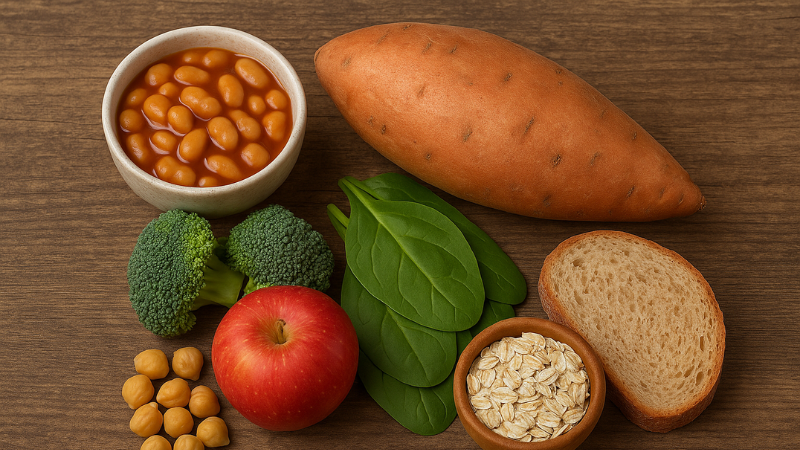
Diet is one of the most direct levers in hemorrhoid management. What you eat shapes the consistency of your stool. Stool consistency determines how much effort is needed to pass it. That effort determines how much pressure reaches the rectal veins.
A low-fiber diet produces harder, slower-moving stool. Hard stool requires straining. Straining inflames hemorrhoids. Improving fiber and water intake is one of the most effective ways to support hemorrhoid relief and reduce recurring flare-ups.[2]
Specific dietary patterns associated with flare-ups include:
- Refined grains (white bread, white rice, pasta), which slow digestion
- Spicy foods, which can irritate the rectal lining during passage
- Alcohol and caffeine, which contribute to dehydration and looser stools
- Processed and fast food, which is typically low in fiber and high in sodium
Hydration compounds the problem. Without adequate water intake, even dietary fiber cannot soften stool effectively. Dehydration narrows the stool and makes constipation more likely.
For a detailed breakdown of which foods most commonly trigger flare-ups, visit our guide on what foods trigger hemorrhoids.
Can Stress Cause Hemorrhoids to Flare Up?
Stress does not directly cause hemorrhoids, but it creates conditions that make flare-ups more likely. The gut-brain axis connects psychological stress to digestive function in ways that are clinically documented.
When stress levels rise, the digestive system responds. Some people experience constipation; others experience diarrhea. Both outcomes increase pressure or irritation in the rectal area. Stress also tends to shift behavior: people skip meals, eat processed food, move less, and delay bathroom visits. Each of these patterns is a known flare trigger.
For patients who already have internal hemorrhoids, stress can push a stable situation into an active one. Symptoms that were manageable may become painful. Bleeding that was intermittent may become more frequent.
Our full article on whether stress can cause hemorrhoids explores this connection in more detail, including its effect on bleeding risk and the risk of prolapse.
Why Do Hemorrhoids Flare Up During or After Bowel Movements?
Many patients notice that symptoms are worst during or immediately after a bowel movement. This is not coincidental. A bowel movement is one of the highest-pressure events the rectal veins experience.
During defecation, blood flows into the hemorrhoidal cushions to help protect the anal canal as stool passes. In healthy tissue, this blood quickly drains afterward. In hemorrhoidal tissue, the drainage mechanism is compromised. The veins remain engorged longer, making them more susceptible to irritation from stool passage, wiping, and residual pressure.[3]
Contributing factors specific to bowel-movement-related flare-ups:
- Hard stools that scrape or compress swollen tissue
- Extended toilet time that keeps gravitational pressure on anal veins
- Straining that forces blood volume into already-enlarged vessels
- Vigorous wiping, which directly irritates inflamed mucosa
Understanding how long a hemorrhoid flare-up typically lasts can also help set realistic expectations for recovery.
How Are Hemorrhoid Flare-Ups Treated?
Most hemorrhoid flare-ups can be managed initially with conservative measures aimed at reducing pressure on the rectal veins and improving stool consistency. The appropriate approach depends on symptom severity, hemorrhoid grade, and how frequently flare-ups occur.
Home and Lifestyle Approaches
Lifestyle changes can provide hemorrhoid relief and help reduce future flare-ups:
- Increasing fiber intake through fruits, vegetables, whole grains, or fiber supplements
- Drinking plenty of water to help soften stool
- Taking warm sitz baths for 10 to 15 minutes several times per day
- Avoiding prolonged sitting on the toilet
- Exercising regularly to support healthy bowel function
- Responding promptly to the urge to have a bowel movement
- Using gentle, unscented wipes or damp toilet paper to reduce irritation
Over-the-Counter Relief
Some patients find temporary symptom relief with witch hazel pads, hemorrhoid creams containing hydrocortisone, protective creams that reduce irritation, or oral pain relievers approved by a healthcare provider. These products may help reduce discomfort, itching, or swelling, but they do not address the underlying hemorrhoidal tissue.
Minimally Invasive Hemorrhoid Treatment
When conservative measures are no longer effective, minimally invasive options may help reduce bleeding, prolapse, and recurring symptoms. Hemorrhoid artery embolization (HAE) is an image-guided outpatient procedure that decreases blood flow to internal hemorrhoids, causing them to shrink over time. A hemorrhoid specialist can determine whether HAE or another approach is appropriate based on the type and severity of hemorrhoids present.
When to See a Hemorrhoid Specialist
Some flare-ups settle within a few days with conservative measures: increased fiber, more water, warm sitz baths, and reduced toilet time. Whether internal hemorrhoids can go away on their own often depends on their severity and whether symptoms continue to return. Others do not.
You should consider an evaluation if:
- Bleeding persists for more than one week
- Symptoms return repeatedly, even after periods of improvement
- You notice a lump or tissue protruding from the anus that does not retract
- Pain is severe or interferes with daily activities
- Home care measures are no longer providing relief
Can USA Hemorrhoid Centers Help?
At USA Hemorrhoid Centers, evaluation is performed by experienced interventional radiologists who specialize in internal hemorrhoid care. Hemorrhoid artery embolization (HAE) is a minimally invasive, image-guided outpatient procedure that reduces blood flow to hemorrhoidal tissue, causing it to shrink over time. The procedure requires only light sedation and local anesthetic, not general anesthesia, allowing most patients to go home the same day and resume normal activities with minimal downtime.
HAE is not appropriate for every case. The first step is a consultation to review your symptoms, confirm the type and grade of hemorrhoids, and determine whether you are a candidate. If you have been managing recurring flare-ups without lasting relief, that conversation is worth having.
Treatment option: hemorrhoid treatment
Home care can ease symptoms. But it cannot shrink the underlying hemorrhoidal tissue.
If you are looking for hemorrhoid treatment options beyond diet and home care, professional evaluation may help identify the most effective solution.
USA Hemorrhoid Centers offers minimally invasive hemorrhoid treatment performed by experienced specialists. Procedures are completed in the office, typically in under an hour, with no general anesthesia required and a rapid return to daily activities for most patients. The first step is a consultation to evaluate your symptoms and discuss the options that fit your situation.
Frequently Asked Questions About Hemorrhoid Flare-Ups
- De Marco S, Tiso D. Lifestyle and Risk Factors in Hemorrhoidal Disease. Frontiers in Surgery. 2021;8:729166. https://www.ncbi.nlm.nih.gov/pmc/articles/PMC8432943/
- Fontem RF, Eyvazzadeh D. Internal Hemorrhoid. In: StatPearls [Internet]. Treasure Island (FL): StatPearls Publishing; 2024. https://www.ncbi.nlm.nih.gov/books/NBK537182/
- Sun Z, Migaly J. Review of Hemorrhoid Disease: Presentation and Management. Clin Colon Rectal Surg. 2016;29(1):22-29. doi:10.1055/s-0035-1568144
- Kim SY, et al. Risk factors for hemorrhoidal disease among healthy young and middle-aged Korean adults. Scientific Reports. January 7, 2022. https://www.nature.com/articles/s41598-021-03838-z
Medical disclaimer: USA Hemorrhoid Centers content provides medical education only. It is not a diagnosis or treatment recommendation. Consult a hemorrhoid specialist for evaluation.