

Medically reviewed by
Dr. Yan Katsnelson, MD
CEO of USA Hemorrhoid Centers | Reviewed: August 2026
When comparing an anal fissure vs hemorrhoids, many patients struggle to tell which condition is causing their discomfort. Both issues commonly produce rectal bleeding, perianal irritation, and pain during bowel movements, making self-diagnosis difficult.
While both problems are frequently triggered by constipation and straining, they stem from entirely different anatomical causes. Recognizing the key differences between an anal fissure vs hemorrhoids is crucial for choosing the right treatment plan and getting long-term relief.
At USA Hemorrhoid Centers, our interventional radiologists specialize in diagnosing and treating symptomatic internal hemorrhoids using advanced, non-surgical techniques. Below is a complete guide to understanding the differences between anal fissures and hemorrhoids, recognizing key symptoms, and exploring modern treatment options.
Anal Fissure vs Hemorrhoids: What Is the Difference?
The fundamental difference between these two conditions lies in what is causing the symptoms:
- An anal fissure is a physical tear or laceration in the thin mucosal lining of the lower anal canal.
- An internal hemorrhoid is a cluster of swollen, inflamed veins and vascular cushions inside the rectum above the dentate line.
- An external hemorrhoid is an enlarged, dilated vein located under the sensitive skin surrounding the outside of the anus.
While both issues can cause perianal irritation and rectal bleeding, their symptom profiles are quite distinct:
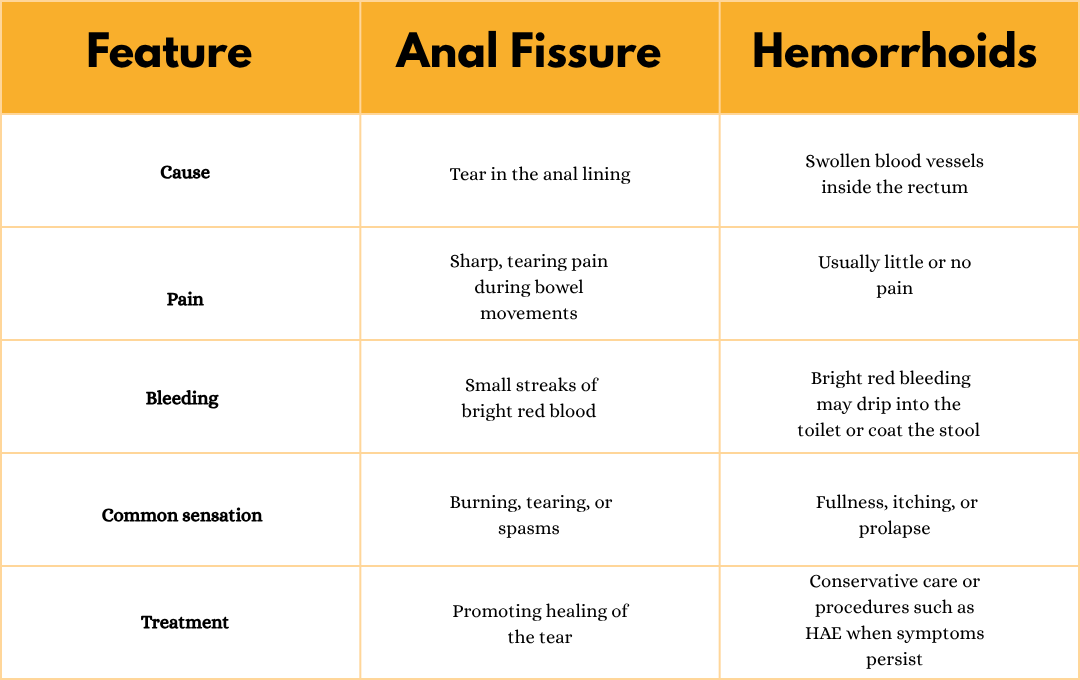
Anal fissures typically trigger severe, razor-sharp pain during bowel movements that often continues as a burning or throbbing ache for several hours.
Internal hemorrhoids rarely cause sharp pain because they lack somatic pain receptors. Instead, they present with painless bright red bleeding, mucus discharge, or prolapsed tissue.
External hemorrhoids cause noticeable perianal swelling, localized aching, tenderness, and sometimes acute pain if a blood clot forms inside the vein.
Anal Fissure vs. Internal Hemorrhoids: At a Glance
Although both conditions can leave bright red streaks on toilet paper or in the bowl, the onset, severity, and type of pain are the most dependable indicators.
Understanding Hemorrhoidal Disease
Hemorrhoids are naturally occurring vascular structures in the anal canal. When excess pressure builds in the pelvic region, these vessels stretch, swell, and develop into symptomatic hemorrhoidal disease.
Common Causes of Hemorrhoids
- Chronic constipation and straining during bowel movements
- Prolonged sitting on the toilet
- Heavy lifting and repeated physical exertion
- Pregnancy and elevated pelvic pressure
- Excess body weight
Types of Hemorrhoids
Hemorrhoids are categorized based on their position relative to the dentate line. Internal hemorrhoids are the primary cause of chronic bleeding and can be treated without invasive surgery through Hemorrhoid Artery Embolization (HAE).
Internal Hemorrhoids
Internal Hemorrhoids form within the rectum above the dentate line. Because this area lacks somatic pain receptors, internal hemorrhoids are usually painless. Their most common sign is painless rectal bleeding. Key symptoms include:
- Bright red bleeding visible in the bowl or on tissue
- Perianal itching and irritation
- Mucus discharge
- A sensation of rectal fullness or incomplete bowel movements
- Prolapse, where swollen internal cushions extend outside the anus
External Hemorrhoids
External hemorrhoids develop below the dentate line under pain-sensitive skin. These are much more likely to cause physical discomfort, localized aching, and palpable lumps.
Common symptoms include:
- Tenderness and soreness around the anal opening
- Visible external swelling
- Perianal itching
- Firm, sensitive bumps near the anus
- Sudden, intense pain if a blood clot forms (thrombosed hemorrhoid)
Understanding Anal Fissures
An anal fissure is a small, linear cut in the lining of the lower anal canal. This laceration exposes the underlying internal anal sphincter muscle, which often goes into painful spasms that restrict localized blood flow and slow down healing.
Common Causes of Anal Fissures
- Passing hard, dry, or unusually large stools
- Persistent, severe diarrhea
- Excessive baseline resting pressure in the anal sphincter muscles
- Local trauma during childbirth or prior anorectal procedures
Can You Have Both an Anal Fissure and Hemorrhoids?
Yes, an anal fissure and hemorrhoids frequently happen at the same time.
Because both conditions share common causes like chronic constipation and straining, one can easily exacerbate the other. The acute pain from an anal fissure causes the internal sphincter muscle to contract tightly. These persistent muscle spasms reduce blood flow and elevate pelvic venous pressure, which can worsen underlying hemorrhoids.
Advanced Non-Surgical Treatment: Hemorrhoid Artery Embolization (HAE)
While conventional care often forces patients to choose between temporary creams and painful surgery, interventional radiology provides an advanced, non-surgical alternative.
At USA Hemorrhoid Centers, our interventional radiologists specialize in Hemorrhoid Artery Embolization (HAE) for symptomatic internal hemorrhoids.
- Minimally Invasive: Using real-time image guidance, a specialist guides a tiny catheter to block selected microscopic arterial branches feeding the hemorrhoids, allowing the enlarged tissue to shrink naturally over time.
- Significantly Less Pain: Because HAE requires no surgical excision, incision, or banding of rectal tissue, patient discomfort is substantially lower compared to traditional hemorrhoidectomy.
- Outpatient Convenience: The procedure is performed in an outpatient clinic with minimal recovery downtime, allowing most patients to return to everyday activities within one to two days.
When to See a Doctor for Anal Fissures or Hemorrhoids
Consult a healthcare professional if you experience any of the following symptoms:
- Rectal bleeding or anal pain lasting longer than seven days despite home remedies
- Large, painful, or worsening lumps near the anus
- Dark red, maroon, or tarry blood in the stool
- Dizziness, lightheadedness, fatigue, or severe pain that disrupts your daily routine
An accurate clinical evaluation by an experienced specialist is essential to rule out other conditions and ensure you receive the correct treatment. This is especially important because rectal bleeding needs a professional evaluation to confirm its source.
Accessing Expert Care at USA Hemorrhoid Centers
Ongoing anorectal symptoms do not have to disrupt your quality of life. Interventional radiologists at USA Hemorrhoid Centers provide comprehensive diagnostic assessments and modern, non-surgical treatment options tailored to your needs.
We offer consultations and outpatient procedures at clinics nationwide and accept most major insurance plans.
Non-Surgical Hemorrhoid Relief Option
Find Lasting Relief Beyond Temporary Home Care
Fiber supplements and warm sitz baths can temporarily soothe symptoms, but home care cannot shrink chronic internal hemorrhoids permanently.
Hemorrhoid Artery Embolization (HAE) provides long-term relief with minimal downtime, no hospital admission, and no surgical cutting.
Frequently Asked Questions: Anal Fissure vs Hemorrhoids
Medical Disclaimer: This article provides educational information about internal hemorrhoids and treatment options. It does not constitute medical advice or diagnosis. Only a qualified hemorrhoid specialist can diagnose your condition or recommend appropriate procedures. If you experience persistent rectal bleeding, consult a physician or contact USA Hemorrhoid Centers directly.