

Why Do Hemorrhoids Flare-Up?
MD Medically reviewed by USA Clinics Medical Review Team Reviewed August 2026 Hemorrhoids flare up when pressure builds inside the rectal veins, causing swelling, bleeding, and discomfort. The flare may last a few days or linger for weeks depending on the trigger and whether the pressure is relieved. We will cover the most common causes, […]

Why Rectal Bleeding Needs a Professional Evaluation
UHC Medically reviewed by Dr. Jacob White, M.D., Interventional Radiology Reviewed August 2026 Rectal bleeding is most often caused by internal hemorrhoids, but other conditions can produce the same symptom. Whether the blood appears on toilet paper, drips into the bowl, or coats the outside of stool, rectal bleeding deserves more than a self-diagnosis. We […]

Can Internal Hemorrhoids Go Away On Their Own?
UHC Medically reviewed by USA Hemorrhoid Centers Medical Review Team Experienced interventional radiology specialists Reviewed: August 2026 Internal hemorrhoids sometimes go away on their own, but whether they do largely depends on their grade, how long they have been present, and whether the habits that contributed to them are addressed. Grade 1 hemorrhoids may resolve […]
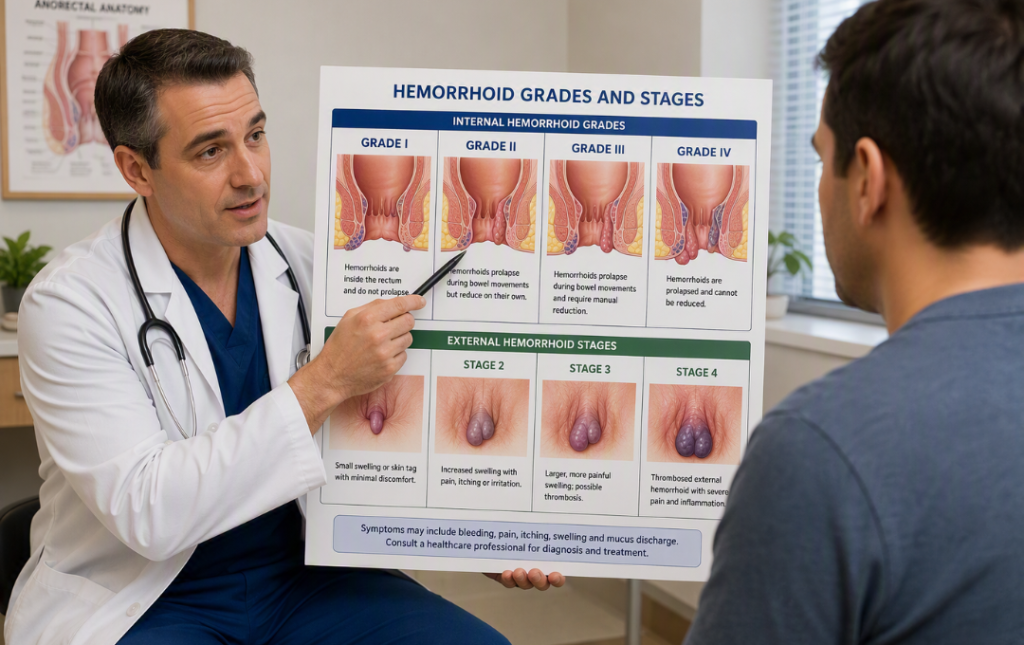
Hemorrhoid Grades and Stages: What Each Level Means
UHC Medically reviewed by USA Clinics Medical Review Team Reviewed August 2026 Internal hemorrhoids are classified into four grades based on how much the tissue prolapses, or slides out, of the anal canal. Grade 1 stays inside; Grade 4 stays permanently outside. Knowing your grade helps a hemorrhoid specialist determine whether lifestyle adjustments may help […]

Pregnancy Hemorrhoids by Trimester: What’s Normal and When to Seek Help
UHC Medically reviewed by USA Clinics Medical Review Team Reviewed August 2026 Hemorrhoids affect an estimated 25% to 40% of pregnant women, making them one of the most common – and least-discussed – physical changes that come with carrying a baby.[1] They can appear at any stage of pregnancy, but the timing, severity, and what […]