
When dealing with hemorrhoids, many people wonder, “Can a hemorrhoid burst?”
Hemorrhoids, which are swollen veins in and around the rectum and anus, can burst, or break apart suddenly, though it’s uncommon. Typically, burst hemorrhoids are thrombosed external hemorrhoids with a blood clot that exerts enough pressure to rupture the swollen vein. However, seeking a professional evaluation for any rectal bleeding is crucial for ruling out other potential gastrointestinal conditions.
If you believe you have a thrombosed hemorrhoid, it’s helpful to understand why hemorrhoids burst, what symptoms to expect, and when to seek medical care so you can find lasting relief.
Why Do Hemorrhoids Burst?
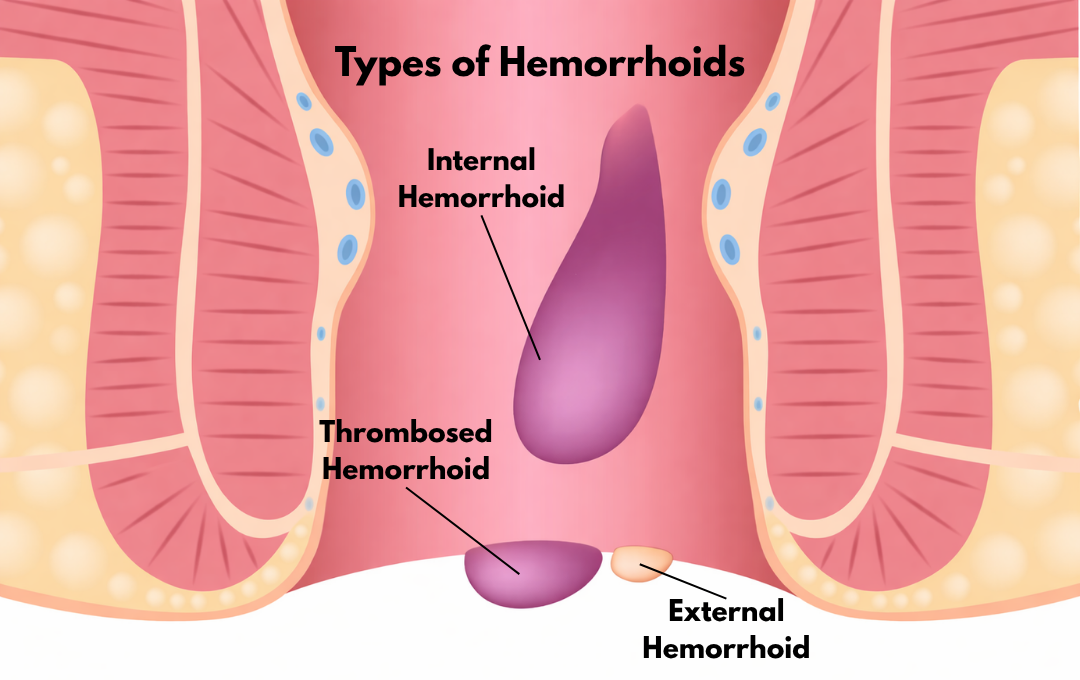
While most hemorrhoids do not burst, certain factors can increase pressure within the swollen vein until it eventually ruptures. A burst hemorrhoid often occurs when a thrombosed external hemorrhoid contains a trapped blood clot. As pressure builds, the skin covering the hemorrhoid can tear and cause bleeding.
A few risk factors that can cause hemorrhoids to burst include:
- Chronic constipation
- Straining during bowel movements
- Sitting on the toilet for extended periods
- Pregnancy and childbirth
- Frequent heavy lifting
- Obesity
- Chronic diarrhea
In terms of which hemorrhoid type is more likely to burst, external hemorrhoids that develop under the skin around the anus have a higher chance of rupturing. Internal hemorrhoids, which form inside the rectum, typically bleed due to irritation. They usually do not burst because they are protected by rectal tissue.
Watch: What is the Difference Between Internal and External Hemorrhoids?
What Happens When a Hemorrhoid Bursts?
After a hemorrhoid bursts, people often notice sudden bleeding, sometimes accompanied by relief from pressure.
Common burst hemorrhoid symptoms include:
- Bright red blood in the toilet or on the toilet paper
- Small amount of blood leaking from the hemorrhoid
- Temporary drainage of a blood clot
- Decreased swelling after the rupture, but the underlying hemorrhoid typically remains, so that recurring symptoms may require treatment.
- Reduced pain if pressure from the clot is relieved
Although hemorrhoids burst only in uncommon situations, the bleeding is usually limited. Minor bleeding that stops on its own is common after a hemorrhoid ruptures.
Is a Burst Hemorrhoid Dangerous?
In most cases, a burst hemorrhoid is not dangerous. Once the trapped blood is released, pressure often decreases and symptoms gradually improve over the next several days.
Whether a burst hemorrhoid requires medical attention depends on your symptoms, including:
| Symptom | What It May Mean |
|---|---|
| A small amount of bright red blood | Common after a hemorrhoid ruptures |
| Bleeding that won’t stop | Needs prompt medical evaluation |
| Dark or black stool | May indicate another digestive condition |
| Fever or worsening pain | Possible infection |
Seek immediate medical attention if bleeding is heavy, continues after ten minutes despite applying gentle pressure, or is accompanied by dizziness, weakness, or fainting. Other digestive conditions, such as anal fissures, inflammatory bowel disease, colon polyps, and colorectal cancer, can also cause rectal bleeding, so consult a medical professional to determine the underlying cause.
What Should You Do if a Hemorrhoid Bursts?
If your hemorrhoids burst, staying calm and properly caring for the area can help reduce discomfort as it heals.
Some recommended self-care methods include:
- Apply gentle pressure with clean gauze for persistent bleeding.
- Take warm sitz baths several times a day.
- Avoid straining during bowel movements.
- After any bowel movements, gently clean the area with warm water.
- Increase your fiber intake through foods or supplements.
- Drink plenty of water.
- Use over-the-counter pain relievers or topical medications as directed by your healthcare provider.
These measures can help relieve symptoms, but they do not eliminate hemorrhoids. A healthcare professional should always evaluate persistent bleeding, recurring thrombosed hemorrhoids, or ongoing pain.
If your symptoms continue or worsen, visit a hemorrhoid specialist at USA Hemorrhoid Centers to determine whether additional treatment is appropriate.
When Should You See a Hemorrhoid Specialist?
While hemorrhoids can improve on their own, there are certain symptoms that should never be ignored.
Seek evaluation from a hemorrhoid specialist if you experience:
- Heavy or ongoing rectal bleeding that lasts for several days or does not improve with basic home care.
- Recurrent hemorrhoids lasting over a year, marked by repeated flare-ups of bleeding, itching, swelling, or pain.
- Symptoms such as bleeding, severe pain, hard lumps or a prolapse that last longer than one week
One of the biggest misconceptions is assuming that hemorrhoids cause all rectal bleeding. While hemorrhoids are common, bleeding is also a sign of more serious digestive conditions.
Can Treatment Prevent a Hemorrhoid From Bursting?
Treating hemorrhoids before hemorrhoids burst or become severe may reduce the risk of complications, including thrombosis and rupture. Many patients improve by combining lifestyle changes with at-home remedies, such as:
- Eating a high-fiber diet
- Staying well hydrated
- Exercising regularly
- Avoiding prolonged sitting or straining
- Maintaining healthy bowel habits
If hemorrhoids continue to cause symptoms despite these measures, additional treatment may be recommended. Minimally invasive options, such as hemorrhoid artery embolization (HAE), may provide longer-lasting relief.
HAE is a non-surgical procedure that cuts off blood flow to hemorrhoids so they shrink over time. Unlike hemorrhoid surgery, HAE does not require incisions and typically offers a shorter recovery period for appropriate candidates.
Don’t Ignore a Burst Hemorrhoid
A burst hemorrhoid can be frightening, but it is usually not life-threatening. While temporary bleeding often resolves on its own, persistent bleeding, severe pain, or recurring hemorrhoids should always be evaluated by a hemorrhoid specialist.
Consult a hemorrhoid specialist for early diagnosis and treatment to prevent complications and relieve your symptoms. If you experience ongoing hemorrhoid symptoms or rectal bleeding, schedule a consultation with our specialists at USA Hemorrhoid Centers to discuss personalized treatment options.
Talk to a Hemorrhoid Specialist
FAQs
Can I pop a hemorrhoid?
You should never intentionally pop or squeeze a hemorrhoid, as it can increase your risk of infection, excessive bleeding, and damage to nearby tissue.
How long do hemorrhoids bleed after they burst?
A burst hemorrhoid typically stops within a few minutes. Any bleeding lasting more than 10–15 minutes, or that recurs, should be evaluated.
What should I do if a hemorrhoid bursts?
If a hemorrhoid bursts, clean it gently with warm water. Then, apply light pressure if bleeding continues, take warm sitz baths, and avoid straining during bowel movements. Consult a medical professional if bleeding persists.
Can internal hemorrhoids burst?
Yes, but internal hemorrhoids are less likely to burst since they are inside the rectum. They can bleed when irritated, especially during bowel movements.
Can a thrombosed hemorrhoid burst on its own?
A thrombosed hemorrhoid can burst on its own from pressure caused by a trapped blood clot. The underlying hemorrhoid typically remains, so recurring symptoms may require treatment.