
April 30th, 2026
01:06 PM
Hemorrhoids are a common condition, but many people delay getting help because they feel unsure, or uncomfortable, about how the diagnosis works. Getting a firm understanding on how hemorrhoids are diagnosed can help ease anxiety and make it easier to take the next step toward relief.
Why Proper Hemorrhoid Diagnosis Matters
Symptoms like rectal bleeding, itching, pressure, or pain can be alarming. While hemorrhoids are a frequent cause, they are not the only possible explanation for these symptoms. A proper diagnosis helps:
- Confirm whether hemorrhoids are present
- Determine whether they are internal or external
- Rule out other conditions with similar symptoms
- Guide next steps if symptoms persist or worsen
Because symptoms can overlap with other rectal or digestive conditions, self‑diagnosis is often unreliable. A medical evaluation provides clarity and peace of mind.
How Doctors Diagnose Hemorrhoids
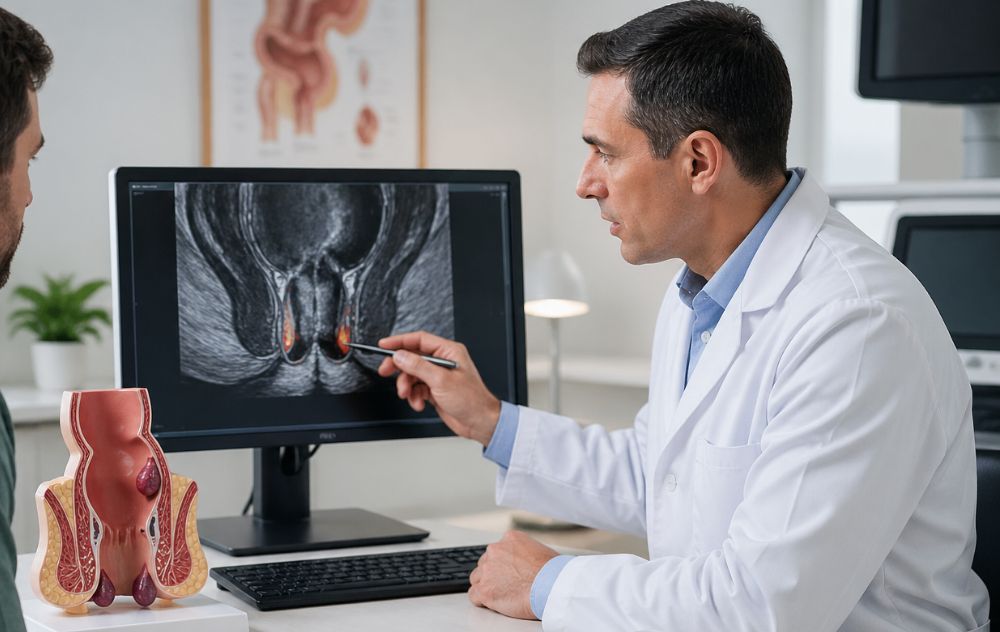
Diagnosing hemorrhoids typically involves a combination of medical history and a focused physical exam. In many cases, this process is straightforward and does not require extensive testing.
1. Review of Symptoms and Medical History
The first step is discussing your symptoms. A provider may ask about:
- Rectal bleeding or spotting
- Pain or discomfort during bowel movements
- Itching, swelling, or pressure in the anal area
- Changes in bowel habits
- How long symptoms have been present
Sharing accurate details—even if they feel uncomfortable—helps ensure an accurate diagnosis.
2. Visual Examination
For external hemorrhoids, a visual exam of the anal area is often enough to identify swelling or irritation. This portion of the exam is brief and helps determine whether symptoms are coming from hemorrhoids located outside the anus.
3. Internal Examination
Because internal hemorrhoids form inside the rectum, they are not always visible from the outside. In some cases, a provider may perform a gentle internal exam to assess internal tissue and check for abnormalities.
If needed, a short diagnostic instrument may be used to allow the provider to see inside the anal canal. This helps confirm whether internal hemorrhoids are present and whether they may be contributing to symptoms like bleeding or pressure. Not every patient requires this step, and exams are performed carefully with patient comfort in mind.
Are Additional Tests Ever Needed?
Most hemorrhoid diagnoses do not require advanced testing. However, further evaluation may be recommended if:
- Bleeding is persistent or unexplained
- Symptoms do not improve over time
- There is concern about another condition
In those situations, a provider may recommend additional diagnostic steps to ensure symptoms are not being caused by something else. This is done to protect patient safety and accuracy—not because hemorrhoids are uncommon.
What a Hemorrhoid Evaluation Is Like
Many patients worry about discomfort or embarrassment, but hemorrhoid evaluations are designed to be:
- Quick – appointments typically focus only on what’s necessary
- Private – conducted in a professional medical setting
- Respectful – providers are experienced in treating sensitive conditions
- Informative – patients can ask questions and understand their diagnosis
Knowing what to expect often makes the process feel far less intimidating.
What Happens After a Hemorrhoid Diagnosis?
Once a diagnosis is made, the next step is understanding your options. At USA Hemorrhoid Centers, your provider will review your diagnosis, symptom severity, and medical history to determine what type of care may be appropriate.
For some patients, this includes a discussion about whether they may be a candidate for Hemorrhoid Artery Embolization (HAE). HAE is a minimally invasive, image‑guided approach that targets the blood flow contributing to hemorrhoid symptoms. Candidacy for this option can only be determined after a proper diagnosis and evaluation by a specialist.
Not every patient is a candidate, which is why an accurate diagnosis is essential. Your provider will explain findings, answer questions, and discuss next steps based on your individual needs and symptoms.
When to See a Hemorrhoid Specialist
You should consider scheduling an evaluation if you experience:
- Rectal bleeding that doesn’t go away
- Ongoing pain, itching, or swelling
- Symptoms that interfere with daily activities
- Uncertainty about what’s causing your symptoms
Early diagnosis can help prevent symptoms from worsening and reduce the risk of complications from untreated hemorrhoids.
Getting Answers Starts With an Evaluation
If you’re experiencing symptoms and wondering how hemorrhoids are diagnosed, a professional evaluation can provide clarity and reassurance. At USA Hemorrhoid Centers, diagnosis focuses on understanding your symptoms and identifying the cause—so you can move forward with confidence.
Scheduling an evaluation is often the first step toward relief.