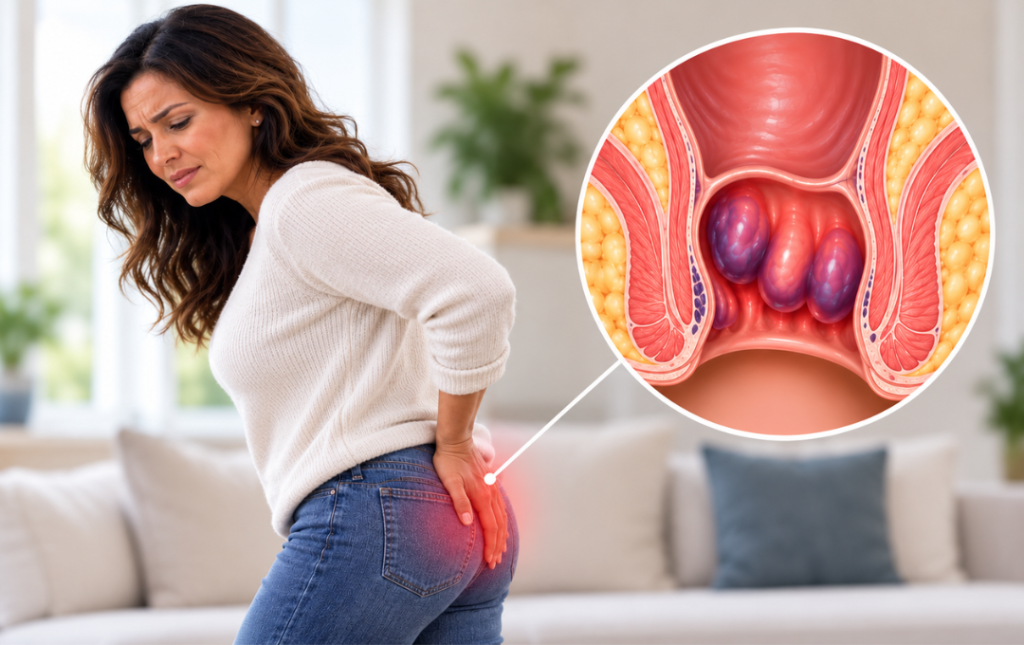
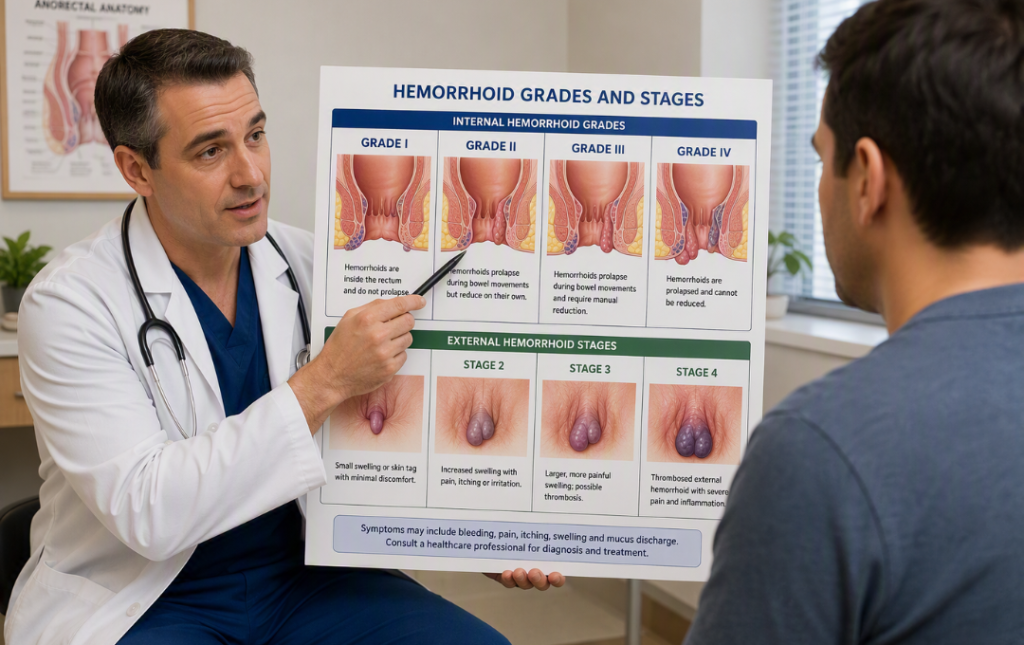
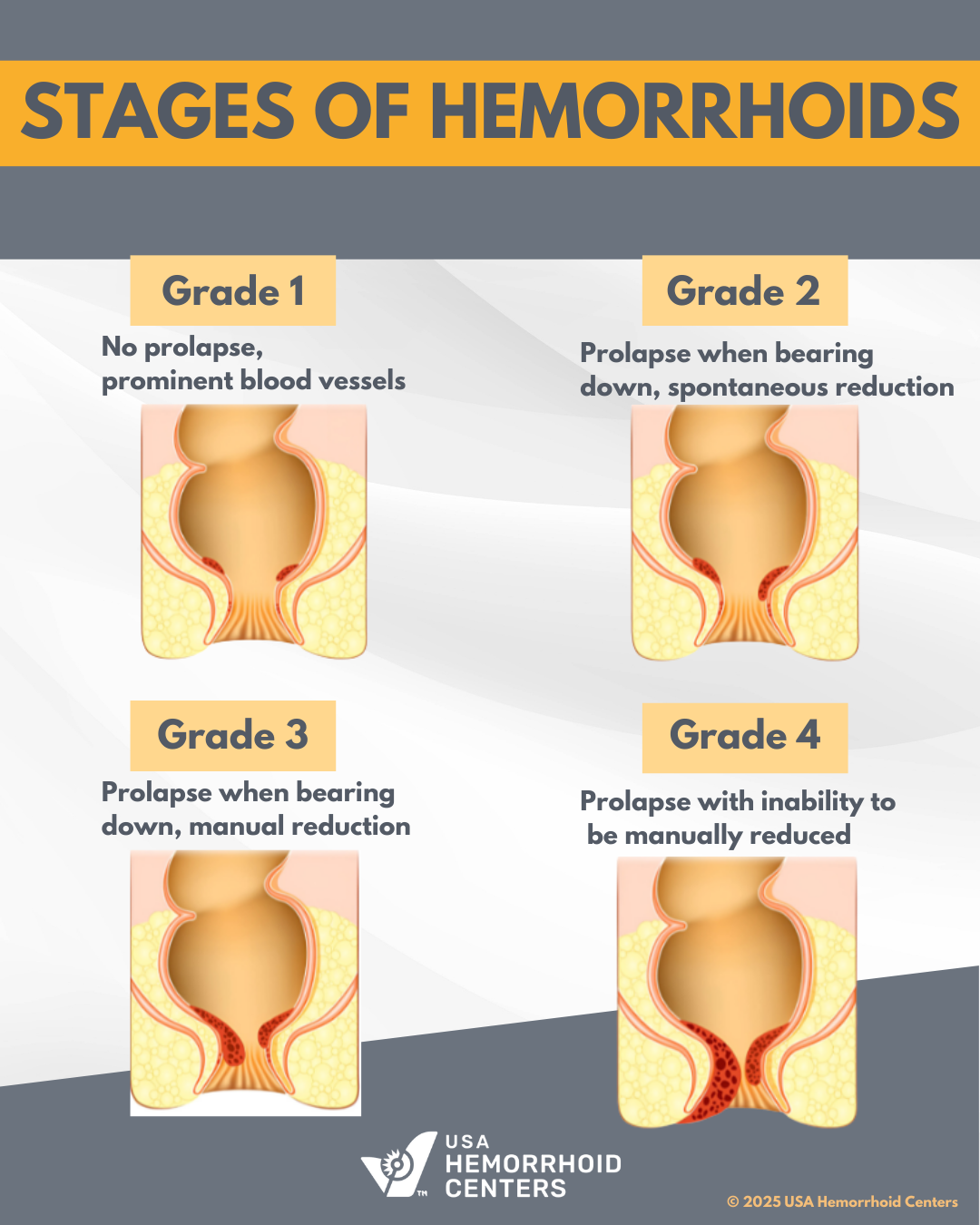
Internal hemorrhoids form when the veins inside the rectum swell due to increased pressure. Straining during bowel movements, pregnancy, chronic constipation, and prolonged sitting are the primary causes. While internal hemorrhoids are common, manageable, and rarely indicative of a severe condition on their own, understanding their symptoms is essential for proper management.
Below is an overview of what triggers internal hemorrhoids, how early signs differ from other conditions, and answers to common patient questions regarding bathroom habits and symptom duration.
What Are Internal Hemorrhoids?
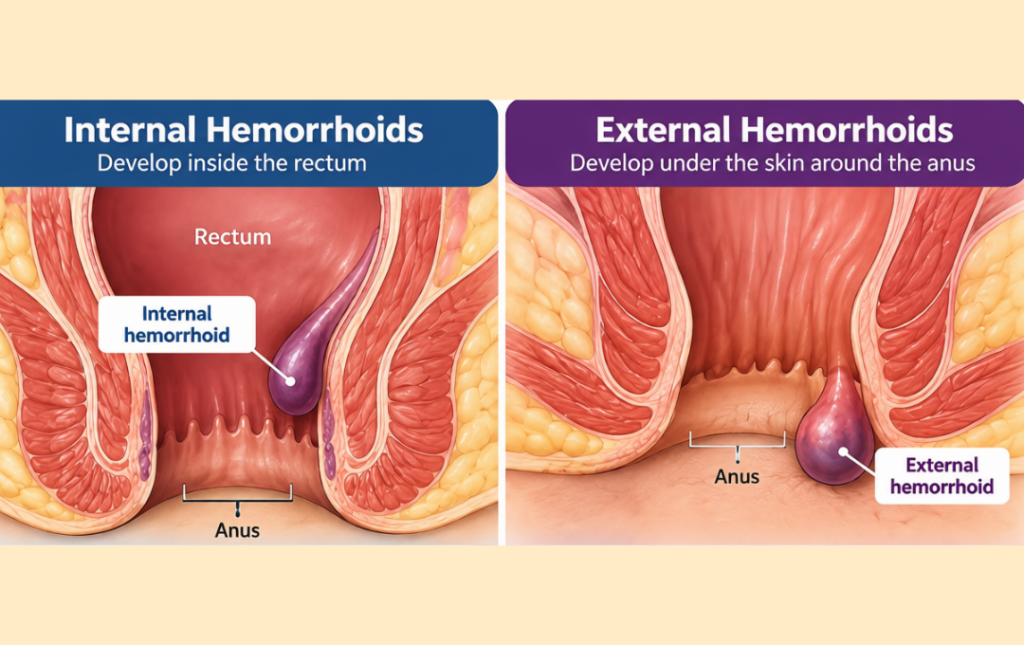
Hemorrhoids are cushions of blood vessels and tissue inside the rectum that help control bowel movements. Everyone has them. They only become a problem, known as hemorrhoidal disease, when the veins inside swell and become irritated. Internal hemorrhoids sit above the anal canal, in an area with very few pain nerves. That is why they rarely hurt, even though they can bleed. Unlike external hemorrhoids, which form under the skin around the anus, internal hemorrhoids are not visible unless they prolapse, or push through the anal opening.1
What Causes Internal Hemorrhoids to Develop?
Internal hemorrhoids develop when ongoing pressure builds up in the veins of the lower rectum. That pressure can come from several everyday habits and life stages.
Straining and Constipation
Straining during a bowel movement is one of the most common causes of internal hemorrhoids. Hard stools from constipation force the rectal veins to stretch and swell. Frequent diarrhea can have a similar effect.2
Low-Fiber Diet and Dehydration
A diet low in fiber makes stool harder and more difficult to pass. Not drinking enough water adds to the problem. Both factors increase straining, which raises pressure on the veins in the rectum.
Pregnancy and Added Abdominal Pressure
A growing uterus places direct pressure on the pelvic veins. Hormonal changes during pregnancy can also slow digestion, which can lead to constipation. This combination is why internal hemorrhoids are common during pregnancy and shortly after delivery.
Prolonged Sitting
Sitting for long stretches, especially on the toilet, lets blood pool in the rectal veins. Scrolling on a phone while sitting on the toilet can extend this pressure without a person realizing it.
Aging and Weakened Tissue
As people age, the tissue that supports the rectal veins can weaken and stretch. This makes prolapsed hemorrhoids more likely later in life, even without one specific trigger.
Internal hemorrhoids often cause few or no symptoms at first. When symptoms do appear, the most common signs include:
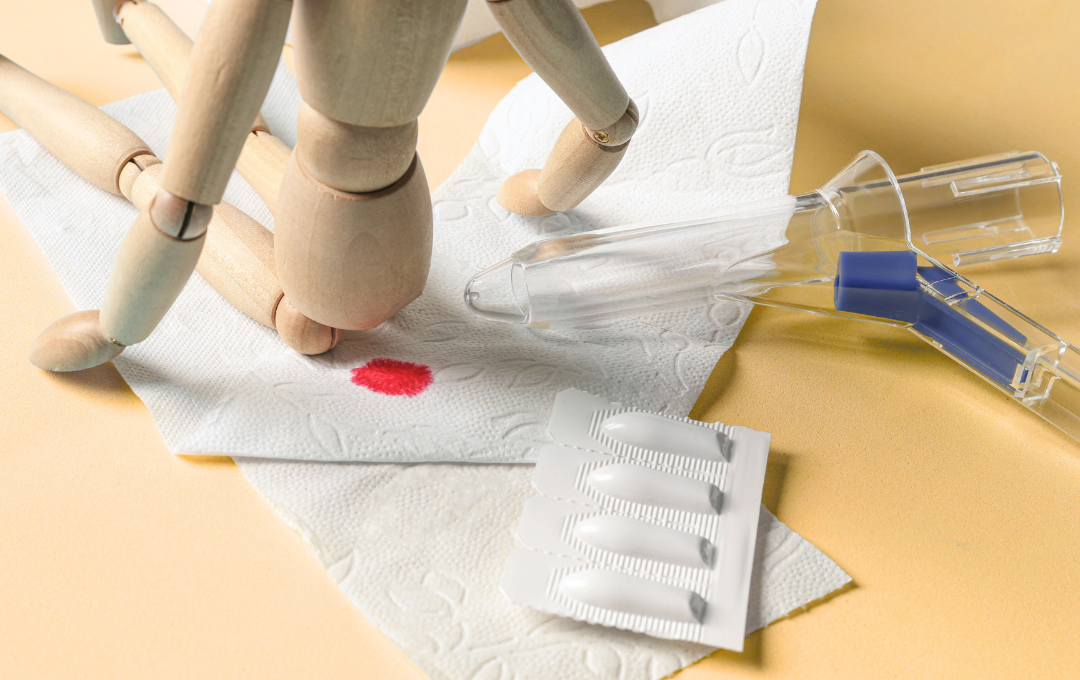
Bright red blood on toilet paper or in the toilet bowl
A feeling of fullness or pressure in the rectum
Mild itching or irritation from mucus discharge
Tissue that slips out of the anus during or after a bowel movement, known as prolapse3
Rectal bleeding should always be checked by a doctor, since other conditions can cause similar symptoms.
Can You Still Have Bowel Movements With Internal Hemorrhoids?
Yes. Internal hemorrhoids do not block or prevent bowel movements. Most people with internal hemorrhoids pass stool normally, though straining can make symptoms like bleeding or discomfort worse. Softer stool and steady hydration can make bowel movements more comfortable while the area heals.
When to See a Hemorrhoid Specialist
Mild internal hemorrhoid symptoms often improve within about a week with fiber, water, and gentle activity. See a specialist if you notice:
Bleeding that does not stop or keeps coming back
Hemorrhoids that prolapse and do not retract on their own
Pain or swelling that interferes with daily life
Symptoms that last longer than one to two weeks despite home care
An experienced hemorrhoid specialist can confirm the cause of your symptoms and recommend a treatment plan suited to your case.
Can USA Hemorrhoid Centers Help?
USA Hemorrhoid Centers offers Hemorrhoid Artery Embolization (HAE), a minimally invasive, outpatient procedure that reduces blood flow to the arteries feeding the hemorrhoidal tissue. The procedure is typically completed in under an hour, and most patients return to normal activities quickly. An experienced interventional radiologist evaluates the grade and type of your hemorrhoids before recommending the right approach for you.
Fiber and water can help. But they do not address swollen veins that are already irritated.
Increasing fiber, drinking more water, and avoiding long periods of sitting can ease mild symptoms. But if bleeding, prolapse, or discomfort keeps coming back, lifestyle changes alone are unlikely to resolve the underlying issue.
USA Hemorrhoid Centers offers minimally invasive, outpatient treatment performed by experienced specialists. Procedures are completed in the office, typically in under an hour, with no general anesthesia required. The first step is a consultation to review your symptoms and discuss options that fit your situation.
Mild internal hemorrhoids often improve with more fiber, more water, and less straining during bowel movements. Sitz baths can ease irritation. If symptoms persist beyond one to two weeks, or keep coming back, a specialist can offer treatments like Hemorrhoid Artery Embolization (HAE) to reduce blood flow to the affected tissue.
Should I worry about internal hemorrhoids?
Internal hemorrhoids are common and usually not dangerous on their own. However, any rectal bleeding should be evaluated by a doctor, since other conditions can cause similar symptoms. Persistent bleeding, prolapse, or pain are reasons to schedule an evaluation rather than wait it out.
How long do internal hemorrhoids last?
Mild internal hemorrhoids can improve within a few days to a week with fiber, hydration, and reduced straining. More persistent or advanced hemorrhoids can last for weeks, months, or longer without treatment, and symptoms may continue to return until the underlying pressure is addressed.
Can I still poop with internal hemorrhoids?
Yes. Internal hemorrhoids do not block bowel movements. Most people pass stool as usual, though straining can worsen bleeding or discomfort. Keeping stool soft with fiber and water, and avoiding straining, can make bowel movements more comfortable while symptoms ease.
What are the first signs of internal hemorrhoids?
The earliest sign is often painless, bright red blood on toilet paper or in the toilet after a bowel movement. Some people also notice mild itching, mucus discharge, or a feeling of fullness in the rectum before any tissue becomes visible.
Can internal hemorrhoids go away without treatment?
Mild internal hemorrhoids can improve on their own with more fiber, water, and less straining. However, they can also return, especially if the underlying pressure is not addressed. Hemorrhoids that prolapse, bleed heavily, or persist usually need a specialist’s evaluation.
When should I see a specialist for internal hemorrhoids?
See a specialist if bleeding does not stop or keeps returning, if tissue prolapses and will not retract on its own, or if symptoms last longer than one to two weeks despite home care. A specialist can confirm the cause and recommend the right treatment.
Fontem RF, Eyvazzadeh D. Internal Hemorrhoid. StatPearls [Internet]. Treasure Island, FL: StatPearls Publishing; Updated July 31, 2023.
De Marco S, Tiso D. Lifestyle and Risk Factors in Hemorrhoidal Disease. Frontiers in Surgery. 2021;8:729166.
National Institute of Diabetes and Digestive and Kidney Diseases (NIDDK). Hemorrhoids. U.S. Department of Health and Human Services.
Medical disclaimer: This content is for informational purposes only and is not a substitute for professional medical advice, diagnosis, or treatment. Always seek the guidance of a qualified healthcare provider with any questions you may have regarding a medical condition.
External Vs. Internal Hemorrhoids
October 15th, 2026
02:59 PM
UHC
Medically reviewed by
USA Hemorrhoid Centers Review Team
Reviewed October 2026
Internal and external hemorrhoids are mainly set apart by where they develop. Internal hemorrhoids form inside the lower rectum. External hemorrhoids develop under the sensitive skin around the anus. This difference in location is why symptoms can feel so different between the two types.
Straining, pregnancy, and sitting too long can trigger either one. It is also possible to have both types at the same time. Knowing these differences can help you figure out what you are dealing with, and when it is time to see a specialist.
What Are Internal and External Hemorrhoids?
Hemorrhoids are swollen blood vessels in the lower rectum and around the anus. Everyone has this tissue. It only causes problems when it swells and stretches. Doctors call a hemorrhoid “internal” or “external” based on where it sits.
The anal canal has a boundary called the dentate line. Internal hemorrhoids form above this line, inside the rectum. This area has fewer nerves, so pain is less common. External hemorrhoids form below the line, under the skin near the anus. This area has more nerves, so these hemorrhoids are more likely to hurt. Some people have both types at once. This is called a mixed hemorrhoid.1
Internal Hemorrhoid Symptoms vs. External Hemorrhoid Symptoms
Location determines how hemorrhoids feel and behave. Symptoms can be very different. It depends on whether a hemorrhoid is inside the rectum or under the skin outside it.
Internal Hemorrhoid Symptoms
Internal hemorrhoids usually do not hurt. This is because the rectum has fewer nerve endings. The most common sign is bright red blood. You may see it on toilet paper or in the toilet after a bowel movement. As internal hemorrhoids grow, they can push through the anus. This is called a prolapse. A prolapsed hemorrhoid can cause irritation, mucus, or a feeling that you still need to go.
External Hemorrhoid Symptoms
External hemorrhoids sit in skin with many more nerves. This makes them more likely to itch, swell, and hurt, especially when you sit. Sometimes a blood clot forms inside an external hemorrhoid. This is called a thrombosed hemorrhoid. It can cause sudden, sharp pain and a hard lump near the anus.
What Causes Hemorrhoids to Develop?
Internal and external hemorrhoids usually have the same causes. Extra pressure on the veins can make them swell over time. Common causes include:
Straining on the toilet: often tied to hard or loose stools
Pregnancy and childbirth: these add pressure to veins near the pelvis
Sitting too long: at work, or on the toilet
Low fiber intake: this can make stool harder to pass
Getting older: tissue in this area weakens over time
Family history: this may raise your own risk2
How Are Internal Hemorrhoids Diagnosed and Treated?
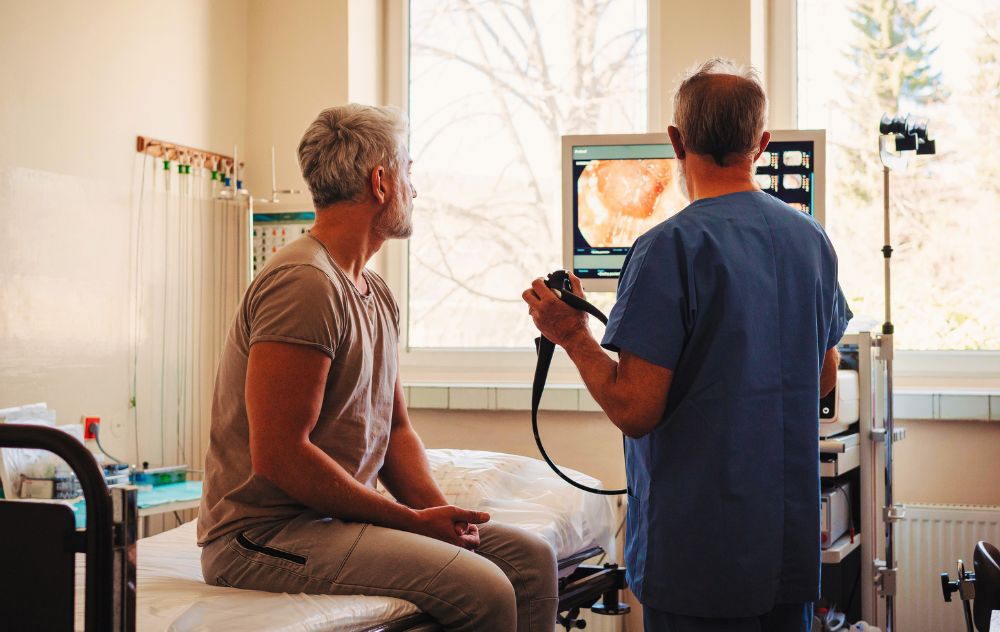
A hemorrhoid specialist will ask about your symptoms first. They will also ask about your bowel habits and health history. External hemorrhoids are easy to see on a simple exam. Internal hemorrhoids are harder to find. Your doctor may use a rectal exam or a small scope to get a clear view.
Mild symptoms of either type may get better with more fiber, more fluids, and less straining. If internal hemorrhoid symptoms do not improve, like ongoing bleeding or prolapse, it may be time to talk with a specialist.
USA Hemorrhoid Centers offers Hemorrhoid Artery Embolization for internal hemorrhoids. HAE is a minimally invasive, outpatient procedure. It lowers blood flow to the hemorrhoid so it can shrink over time. An experienced interventional radiologist performs HAE. It does not need general anesthesia or an overnight stay. External hemorrhoids form in different tissue, so they are treated on their own. A colorectal specialist can help if external symptoms do not improve.
Mild symptoms often settle down on their own. Simple changes at home can help. See a hemorrhoid specialist if you notice:
Bleeding that lasts more than a week, or keeps coming back
A hemorrhoid that will not go back in on its own
Pain that gets in the way of sitting or daily life
A lump that is new or growing, or has a different look than before
Do not assume bleeding is from hemorrhoids without a checkup. Other issues can look similar. Knowing which type you have helps you and your doctor pick the right next step. That might mean HAE for internal hemorrhoids, or a referral for external hemorrhoid care.
Treatment option: internal hemorrhoid treatment
Home care can ease mild symptoms. It will not fix ongoing internal hemorrhoid symptoms.
More fiber, more water, and less straining can help day to day. But if you have bleeding, prolapse, or irritation that will not go away, home care alone may not be enough.
USA Hemorrhoid Centers offers minimally invasive, outpatient care for internal hemorrhoids. Our experienced interventional radiologists complete most procedures in the office in under an hour, with no general anesthesia needed. The first step is a consultation to talk through your symptoms and options.
Neither type is always worse. Internal hemorrhoids usually do not hurt, but they can cause more bleeding and prolapse over time. External hemorrhoids are more likely to cause pain, itching, and sudden discomfort if a clot forms. Which one feels worse often depends on your own symptoms, not the type.
Can I Still Poop With Internal Hemorrhoids?
Yes. Internal hemorrhoids do not usually stop bowel movements. But straining can make symptoms worse, like bleeding or prolapse. More fiber, more water, and less straining may help. If pain or bleeding continues, see a specialist to find out what is going on.
What Is the Fastest Way to Find Relief From Internal Hemorrhoids?
More fiber, more fluids, less straining, and over-the-counter remedies can ease mild symptoms. If symptoms last more than a week, a minimally invasive option like hemorrhoid artery embolization may help with bleeding and prolapse. A hemorrhoid specialist can suggest the right option for you.
What Could Be Mistaken for a Hemorrhoid?
Anal fissures, skin tags, rectal prolapse, and even some polyps can look or feel like a hemorrhoid. They can also cause bleeding or a lump. Since symptoms often overlap, a specialist visit is the best way to know for sure what is causing them.
How Are Internal Hemorrhoids Diagnosed?
A specialist will ask about your symptoms and health history, then do a digital rectal exam. Because internal hemorrhoids are inside the rectum, your doctor may also use a small scope or imaging to check the grade and size before talking about options.
Can Internal Hemorrhoids Be Prevented?
Not always, but some habits can lower your risk. Eat more fiber, drink enough water, avoid long periods of straining or sitting, and stay active. These habits ease pressure on rectal veins. Treating symptoms early may also help keep them from getting worse.
National Institute of Diabetes and Digestive and Kidney Diseases (NIDDK). “Hemorrhoids.” National Institutes of Health. https://www.niddk.nih.gov/health-information/digestive-diseases/hemorrhoids
Kim SY, et al., “Risk factors for hemorrhoidal disease among healthy young and middle-aged Korean adults,” Scientific Reports, January 7, 2022. https://www.nature.com/articles/s41598-021-03838-z
Medical disclaimer: This content is for informational purposes only and is not a substitute for professional medical advice, diagnosis, or treatment. Always seek the guidance of a qualified healthcare provider with any questions you may have regarding a medical condition.
Hemorrhoid Pain Relief: Home Remedies vs. Medical Treatment
September 22nd, 2026
10:54 AM
UHC
Medically reviewed by
USA Hemorrhoid Centers Review Team
Reviewed September 2026
Most hemorrhoid pain can be eased at home, but not every flare-up resolves on its own. For millions of adults, home remedies and over-the-counter creams offer fast comfort by calming surface irritation, itching, and local swelling. However, topical relief does not correct the underlying vascular pressure causing the problem.
When swollen rectal veins become chronically inflamed, enlarged, or prolapsed, temporary measures stop working. Understanding how to manage mild flare-ups at home, recognizing the limits of topical treatments, and knowing when to consult a specialist ensures you address the root cause before complications arise.
Below, we break down clinically effective home remedies, what over-the-counter creams can and cannot do, and how non-surgical medical procedures provide lasting relief when conservative care falls short.
What Causes Hemorrhoid Pain and Discomfort?
Hemorrhoids are vascular structures located in the anal canal that help with stool control. When excessive intra-abdominal pressure causes the veins within these cushions to swell and stretch, symptomatic hemorrhoidal disease develops. Hemorrhoids are categorized based on their position relative to the dentate (pectinate) line, which separates two distinct nerve networks:
Internal Hemorrhoids: Located above the dentate line in the lower rectum. Because this mucosal lining contains visceral nerve fibers, early-stage internal hemorrhoids rarely cause sharp pain. Instead, they typically produce painless bright red bleeding during bowel movements, a feeling of rectal fullness, mucus discharge, or dull aching when swollen or prolapsing.
External Hemorrhoids: Located below the dentate line under the sensitive perianal skin. This area is rich in somatic pain receptors. External hemorrhoids frequently cause sharp discomfort, burning, severe itching, and irritation during sitting or hygiene care.
Pain spikes when inflamed tissue undergoes mechanical irritation from chronic constipation, straining on the commode, hard stool transit, or prolonged sitting. In external cases, blood can pool inside the swollen vessel and form a clot (known as a thrombosed external hemorrhoid). This results in a firm, purplish lump that causes acute, severe throbbing pain requiring prompt clinical evaluation.
Home Remedies That May Ease Mild Hemorrhoid Pain
For first-time flare-ups or mild cases, conservative home care helps reduce inflammation and relaxes the hyperactive pelvic floor muscles surrounding the canal. Clinical evidence supports several non-invasive habits:
Warm Sitz Baths: Soaking the perianal area in warm (not hot) plain water for 15 to 20 minutes, two to three times daily, relaxes the internal anal sphincter, relieves muscle spasms, and increases local blood flow to reduce congestion.
Targeted Fiber and Hydration: Stool consistency directly impacts vascular pressure. Consuming 25 to 35 grams of dietary fiber daily (from oats, flaxseed, beans, or psyllium husk supplements) combined with 64 to 80 ounces of water keeps bowel movements bulky yet soft, eliminating straining.
Cold Compresses: Applying a cloth-wrapped gel pack to the anal verge for 10-minute intervals causes local vasoconstriction, which rapidly numbs intense burning and reduces perianal swelling.
Non-Abrasive Hygiene: Dry toilet paper acts like sandpaper against swollen cushions. Patting the area gently with alcohol-free, unscented wipes or rinsing with a handheld bidet prevents mucosal micro-tears.
Correct Toilet Posture: Resting your feet on a small stool (aligning the colon in a natural squatting angle) straightens the puborectalis muscle. Limit all commode sessions to under five minutes to prevent gravitational pooling of blood.
While these steps significantly improve day-to-day comfort for mild internal hemorrhoids, they work as supportive maintenance rather than a permanent structural cure. When vascular cushions lose elasticity, symptoms frequently return once conservative measures are paused.
Do Over-the-Counter Creams Actually Help?
Pharmacy shelves carry dozens of ointments, suppositories, and medicated pads. Understanding their active ingredients helps set realistic expectations for their effectiveness:
Hydrocortisone Formulations: A mild topical corticosteroid that reduces cellular inflammation, redness, and severe itching. Clinical note: Corticosteroids should not be used continuously for more than seven consecutive days, as prolonged use can cause permanent thinning (atrophy) of the delicate anal skin.
Local Anesthetics (Lidocaine, Pramoxine): These work by blocking nerve signal conduction on the skin surface, delivering temporary numbing relief for acute external pain and burning.
Witch Hazel and Astringents: Plant-derived tannins act as natural astringents, coagulating surface proteins to temporarily tighten local tissue and dry up weeping moisture.
Vasoconstrictors (Phenylephrine): These temporarily constrict local arterioles to diminish swelling, but their effect wears off within hours.
The major limitation of topical products is anatomical reach: they only treat the surface. Over-the-counter preparations cannot repair stretched connective tissue, close dilated feeding arteries, or reverse prolapse in internal hemorrhoids.
When Home Care Is Not Enough: Recognizing Disease Progression
Dietary modifications, including avoiding common foods that trigger hemorrhoid flares (such as ultra-processed items, alcohol, and spicy dishes), lower the frequency of acute episodes. However, internal hemorrhoids are progressive. As the supportive fibroelastic network breaks down, vessels progress through four distinct clinical grades:
Grade 1: Prominent veins inside the anal canal that bleed but do not prolapse past the opening.
Grade 2: Veins prolapse during bowel movements or straining but retract back inside on their own.
Grade 3: Tissue prolapses during bowel movements and requires manual repositioning by the patient.
Grade 4: Irreducible prolapse where internal tissue remains permanently outside the canal, posing a risk of strangulation and thrombosis.
Once hemorrhoids advance into Grade 2, 3, or 4, home remedies and creams are no longer sufficient to stop structural prolapse and chronic bleeding.
When to See a Hemorrhoid Specialist
It is safe to attempt home remedies for mild, occasional discomfort. However, delaying professional care when clear warning signs appear can lead to complications such as chronic anemia, infections, or strangulated tissue. You should schedule a specialized evaluation if you experience:
Rectal bleeding that recurs regularly, increases in volume, or turns dark maroon (bleeding must be clinically evaluated to rule out polyps, inflammatory bowel disease, or colorectal conditions).
Perianal pain or pressure that fails to improve after seven days of consistent conservative care.
A bulging tissue mass that cannot be gently pushed back inside the anal opening.
A hard, painful lump around the anus indicating a potential acute thrombosis.
Systemic symptoms such as lightheadedness, fatigue, dizziness, or fever alongside rectal complaints.
At USA Hemorrhoid Centers, evaluation is performed by board-certified interventional radiologists. Our specialists accurately stage your condition and discuss image-guided, non-surgical therapies that restore your quality of life without extensive downtime.
Comparing Care: Home Care vs. Surgery vs. HAE
Selecting the right treatment depends on the severity, stage, and persistence of your symptoms. Many patients assume the only alternative to creams is painful excisional surgery, but modern interventional medicine provides gentle middle-ground solutions:
Treatment Path
Best For
Mechanism of Action
Recovery Profile
Home Remedies & OTC
Mild Grade 1 flare-ups, temporary itching
Soothes surface inflammation and eases bowel transit
Immediate relief, but high recurrence rate
Hemorrhoid Artery Embolization (HAE)
Persistent, bleeding Grade 1 to Grade 3 internal hemorrhoids
Microcatheter embolization of superior rectal arteries to shrink swollen tissue internally
Outpatient, minimal pain, return to normal activities in 1 to 2 days
Surgical Hemorrhoidectomy
Severe, refractory Grade 4 or gangrenous tissue
Direct surgical excision with scalpels or electrocautery
General anesthesia, high postoperative pain, 2 to 4 weeks recovery
At USA Hemorrhoid Centers, our interventional radiologists specialize in Hemorrhoid Artery Embolization (HAE). This advanced, minimally invasive procedure accesses the arterial vascular network through a tiny pinhole in the wrist or groin. Using advanced imaging, the doctor delivers microscopic particles directly into the rectal arterial branches, cutting off excess blood supply. Over the following weeks, the swollen vascular cushions shrink naturally without wounds or stitches in the rectal canal.
Non-Surgical Outpatient Treatment
Home care can help, but it does not treat the underlying condition.
Adding fiber and trying creams can ease minor irritation. But if recurrent bleeding, prolapse, or pain during bowel movements continues, lifestyle adjustments alone cannot correct enlarged rectal veins.
USA Hemorrhoid Centers provides non-surgical Hemorrhoid Artery Embolization performed on an outpatient basis by experienced interventional radiologists, allowing you to return to your normal routine within 24 to 48 hours.
Frequently Asked Questions About Hemorrhoid Pain Relief
What home remedies work fastest for hemorrhoid pain?
For rapid acute relief, warm sitz baths (15 minutes in lukewarm water) ease muscle spasms around the anal canal, while a cold ice pack wrapped in a clean cloth rapidly reduces local swelling and numbs sharp irritation. These steps provide temporary symptom relief while you adjust fiber and water intake.
Do over-the-counter creams cure hemorrhoids permanently?
No. Over-the-counter creams, hydrocortisone ointments, and suppositories only manage localized surface symptoms such as burning, itching, and mild inflammation. They do not shrink chronically dilated internal vascular cushions or correct arterial blood flow feeding the hemorrhoid.
When should I see a doctor for hemorrhoid bleeding?
Any rectal bleeding should be evaluated by a healthcare specialist, especially if it is recurrent, dark in color, accompanied by changes in bowel habits, or lasts more than a week. Professional assessment ensures accurate diagnosis and rules out other gastrointestinal conditions.
How does Hemorrhoid Artery Embolization (HAE) work?
HAE is a minimally invasive, non-surgical outpatient procedure performed by an interventional radiologist. Using real-time imaging guidance, the physician inserts a tiny catheter into the superior rectal arteries to deposit microscopic embolic agents. This blocks excessive arterial blood flow, causing the swollen internal hemorrhoids to shrink without cuts, sutures, or hospital stays.
Can hemorrhoids come back after treatment?
Hemorrhoids treated only with topical creams frequently return because the underlying high-pressure vascular supply remains intact. Minimally invasive treatments like HAE significantly reduce recurrence rates by directly cutting off arterial feeding vessels, especially when paired with healthy bowel habits and balanced hydration.
References
National Institute of Diabetes and Digestive and Kidney Diseases (NIDDK). Treatment of Hemorrhoids. niddk.nih.gov
American Society of Colon and Rectal Surgeons (ASCRS). Clinical Practice Guidelines for the Management of Hemorrhoids. fascrs.org
Healthline. Hemorrhoids Home Remedies and OTC Treatment. healthline.com
WebMD. Home Treatment and Remedies for Hemorrhoid Relief. webmd.com
Medical disclaimer: USA Hemorrhoid Centers content provides medical education only. It is not a diagnosis or personalized treatment plan. Consult a qualified hemorrhoid specialist or physician for individual medical evaluation.
Do You Need a Colonoscopy for Internal Hemorrhoids?
September 17th, 2026
11:53 AM
UHC
Medically reviewed by
USA Hemorrhoid Centers Medical Review Team Reviewed September 2026
In most cases, you do not need a colonoscopy to diagnose internal hemorrhoids. A specialist can typically identify and grade internal hemorrhoids during a standard in-office evaluation using a targeted physical exam and anoscopy. These quick examinations visualize the lower rectum and anal canal directly without requiring fasting, bowel preparation, or sedation.
While an in-office exam is usually sufficient, a colonoscopy may still be recommended under certain circumstances. Distinguishing between routine hemorrhoid symptoms and symptoms that warrant full endoscopic screening ensures you receive an accurate diagnosis while avoiding unnecessary invasive procedures.
How Internal Hemorrhoids Are Diagnosed in the Office
Receiving an accurate internal hemorrhoid diagnosis does not require complex hospital testing. Because internal hemorrhoids develop above the dentate line (where pain-sensing nerves are sparse), they rarely cause somatic pain. Instead, bright red rectal bleeding or painless tissue prolapse are often the initial signs. Specialists use targeted clinical tools to confirm the source of bleeding and assess disease severity.
A comprehensive diagnostic visit typically includes:
Medical History Review: Your physician examines your symptom pattern, duration of bleeding, bowel frequency, diet, and family history of gastrointestinal conditions.
Visual and Digital Rectal Exam (DRE): A gloved, lubricated finger examination evaluates muscle tone, checks for tenderness, and detects abnormal masses. Because internal hemorrhoids are soft vascular cushions, a DRE alone may miss early-stage or non-thrombosed lesions.
Anoscopy: The primary tool for diagnosing internal hemorrhoids. A short, rigid, hollow lighted tube (anoscope) is gently inserted a few inches into the anal canal. It allows the physician to clearly view the vascular tissue, verify whether hemorrhoids are inflamed or bleeding, and determine their precise grade.
Flexible Sigmoidoscopy: Occasionally utilized if the specialist needs to inspect the rectum and sigmoid colon to rule out distal inflammation or local polyps without performing a full colonoscopy.
Clinical Note: Digital rectal exams and anoscopy take only a few minutes, require no dietary restrictions or laxative bowel prep, and involve no anesthesia or downtime.
Anoscopy vs. Colonoscopy: Key Differences
Understanding how these diagnostic procedures compare helps explain why specialists do not use a colonoscopy as the primary test for hemorrhoids:
Feature
Anoscopy
Colonoscopy
Area Examined
Anal canal and lower rectum (2 to 4 inches)
Entire large intestine (colon and rectum, 4 to 5 feet)
Primary Purpose
Diagnosing hemorrhoids, fissures, and anal canal lesions
Colorectal cancer screening, polyps, colitis, Crohn’s
Preparation
None required
Full oral laxative bowel prep and clear liquid diet
Sedation
No sedation needed
Conscious sedation or monitored IV anesthesia
Procedure Duration
5 to 10 minutes in an exam room
30 to 45 minutes in an endoscopy center
When a Colonoscopy Becomes Medically Necessary
Although a colonoscopy is not required solely to confirm hemorrhoids, it becomes critical when symptoms indicate a potential issue beyond the anal verge. Rectal bleeding from hemorrhoids is typically “outlet bleeding” (bright red blood visible on the toilet paper or in the bowl). When bleeding cannot be verified by anoscopy, or when other clinical red flags appear, evaluating the entire colon is essential.
Red Flag Symptoms That Warrant a Colonoscopy
A specialist will advise a colonoscopy if your evaluation reveals any of the following factors:
Atypical Bleeding: Blood that is dark, maroon, or mixed into the stool, or stool that appears black and tarry (melena), suggesting an upper GI or proximal colon origin.
Persistent Changes in Bowel Habits: Unexplained diarrhea, constipation, or narrowing of stools that persists beyond several weeks.
Systemic Warning Signs: Unintended weight loss, chronic abdominal cramping, unexplained fatigue, or low red blood cell counts (iron deficiency anemia).
Family History of Colorectal Disease: A personal or first-degree family history of colorectal polyps, colorectal cancer, or inflammatory bowel disease (IBD).
Reaching Recommended Screening Age: Medical guidelines recommend routine colorectal screening starting at age 45 for average-risk individuals, regardless of whether hemorrhoids are present.
Clinical Finding: Evaluating rectal bleeding promptly is essential across all demographics. Research from the American College of Surgeons shows that rectal bleeding in adults under 50 is associated with a significantly elevated risk of early-onset colorectal cancer. Never assume rectal bleeding is benign without an in-person physical assessment.
Attributing every instance of rectal bleeding to previous hemorrhoid symptoms is a frequent diagnostic pitfall. Hemorrhoids are common, affecting millions of adults annually. It is entirely possible to have enlarged internal hemorrhoids alongside an independent gastrointestinal issue, such as a precancerous polyp or an anal fissure.
Consulting a dedicated specialist provides diagnostic clarity. If your symptoms correlate cleanly with internal hemorrhoids on anoscopy, you gain peace of mind and avoid extensive testing. If further endoscopic evaluation is warranted, identifying it early ensures prompt medical intervention.
Treatment Options After Diagnosis: Hemorrhoid Artery Embolization
Once internal hemorrhoids are identified, your physician evaluates their grade across the four recognized stages of internal hemorrhoids. Grade 1 and mild Grade 2 hemorrhoids often improve with high-fiber diets, proper hydration, and reduced straining. For chronic bleeding, recurring prolapse, or advanced internal hemorrhoids that fail to resolve with conservative measures, minimally invasive intervention provides long-term relief.
USA Hemorrhoid Centers provides Hemorrhoid Artery Embolization (HAE). Performed by experienced interventional radiologists, HAE is a nonsurgical, image-guided outpatient procedure. By placing microscopic coils or particles into the superior rectal arteries, HAE selectively reduces blood flow to the hemorrhoidal cushions. This causes the swollen tissue to shrink naturally without cutting, excising tissue, or requiring general anesthesia.
Diagnostic Evaluation & Minimally Invasive Care
Get Clear Answers and Targeted Hemorrhoid Relief
An evaluation for internal hemorrhoids is straightforward, comfortable, and usually completed in a single office visit without a colonoscopy. Our experienced clinical team helps determine the precise cause of your rectal bleeding and matches you with effective, non-surgical treatment options.
USA Hemorrhoid Centers operates outpatient clinics nationwide staffed by interventional radiologists dedicated to patient comfort and lasting clinical outcomes.
Is a colonoscopy required to diagnose internal hemorrhoids?
No, a colonoscopy is rarely needed to diagnose internal hemorrhoids. Specialists rely on a visual exam, digital rectal examination, and anoscopy to diagnose and grade internal hemorrhoids in the clinic without sedation or bowel cleanses.
What is the primary test used to detect internal hemorrhoids?
Anoscopy is the definitive test for internal hemorrhoids. The physician inserts a short, illuminated tube into the anal canal to directly view the enlarged vascular cushions and evaluate active bleeding or tissue prolapse.
Can a colonoscopy detect hemorrhoids?
Yes. Internal hemorrhoids are frequently identified during a routine colonoscopy performed for cancer screening. However, physicians do not order a full colonoscopy solely for hemorrhoid evaluation when an in-office anoscopy suffices.
When should rectal bleeding prompt a colonoscopy instead?
A colonoscopy is indicated if rectal bleeding is dark or maroon, mixed in the stool, accompanied by unexpected weight loss, or paired with a persistent change in bowel habits. It is also required for routine colorectal cancer screening in adults aged 45 and older.
Will having hemorrhoids make a colonoscopy painful?
No. Colonoscopies are performed under conscious or deep sedation, so you will not feel pain during the scope insertion. Some patients experience temporary mild perianal irritation from the bowel preparation regimen, which resolves quickly.
Cronin K, et al. “Hemorrhoids Workup: Anoscopy and Flexible Sigmoidoscopy,” Medscape, updated May 31, 2022. https://emedicine.medscape.com/article/775407-workup
American College of Surgeons. “Rectal Bleeding in Young Adults Linked to 8.5 Times Higher Risk of Colorectal Cancer,” ACS Clinical Congress press release, October 3, 2025. https://www.facs.org/media-center/press-releases/2025/rectal-bleeding-in-young-adults-linked-to-85-times-higher-risk-of-colorectal-cancer/
American Cancer Society / U.S. Preventive Services Task Force colorectal cancer screening guidance, age 45 average-risk starting point (as referenced in national reporting, 2026).
USA Hemorrhoid Centers. “How Internal Hemorrhoids Are Diagnosed.” https://www.usahemorrhoidcenters.com/internal-hemorrhoids/diagnosis/
Medical disclaimer: This article provides educational information regarding internal hemorrhoid diagnosis and minimally invasive treatment options. It is not personal medical advice. Only an in-person physical assessment by a qualified medical professional can verify internal hemorrhoids or recommend appropriate therapies. If you experience rectal bleeding, consult a healthcare provider or schedule a consultation with USA Hemorrhoid Centers.
Can Prolonged Sitting Cause Hemorrhoids?
September 6th, 2026
09:47 AM
MRT
Medically reviewed by
USA Clinics Medical Review Team
Reviewed September 2026
Yes, prolonged sitting can directly cause or worsen hemorrhoids. It places constant pressure on the veins in your lower rectum and anus, which slows blood flow and makes the veins swell over time.
We will cover why this happens, other risk factors to watch for, and how you can prevent and treat flare-ups.
Why Sitting for Long Periods Can Cause Hemorrhoids
Hemorrhoids are swollen veins inside or around the anus. They form when too much pressure builds up. This pressure stretches the veins out of shape.
When you sit, your body weight presses on veins near the rectum. This slows blood flow through them. Over time, the veins lose some stretch. They swell more easily. A hard chair adds more pressure than a soft one.
Note: Sitting on the toilet a long time is often worse than sitting at a desk. Gravity pulls blood down toward the rectum, adding even more pressure.
What Is the Biggest Cause of Hemorrhoids Besides Sitting
Sitting is one common trigger for hemorrhoids. However, straining during bowel movements is often called the biggest overall cause. A few other factors can add to your risk:
Constipation: Hard stools force you to strain, which puts direct pressure on rectal veins.
Low-fiber diet: Not enough fiber leads to harder stools and more straining.
Pregnancy: The growing uterus presses on nearby veins, and hormone changes affect vein strength.
Heavy lifting: Lifting the wrong way raises pressure in the belly and rectum.
Family history: Some people are simply more likely to develop hemorrhoids based on genetics.
Small changes to how you sit can lower your risk. Try these steps:
Take breaks often: Stand up and walk for a few minutes every 30 to 60 minutes.
Use a cushioned seat: A soft cushion reduces pressure on rectal veins compared with a hard chair.
Sit with good posture: Keep your back straight instead of slouching forward.
Limit toilet time: Keep bathroom visits under five minutes and avoid straining.
Drink water and eat fiber: Soft stools are easier to pass without straining.
Note: Walking or light exercise also helps blood flow and eases pressure on rectal veins.
What Shrinks Hemorrhoids Immediately
No home remedy shrinks a hemorrhoid right away. A few options can bring quick comfort while swelling goes down on its own:
Cold compress: A cold pack wrapped in cloth can ease swelling and numb discomfort for 10 to 15 minutes at a time.
Sitz bath: Sitting in a few inches of warm water for 10 to 15 minutes can relax the area and reduce swelling.
Over-the-counter creams: Products with witch hazel may help ease itching and irritation.
Less sitting and less straining: Reducing the pressure that caused the swelling in the first place supports faster relief.
If hemorrhoid symptoms do not improve in about a week, or if you notice bleeding, talk with a specialist.
Can USA Hemorrhoid Centers Help
At USA Hemorrhoid Centers, experienced interventional radiologists focus on non-surgical care for internal hemorrhoids.
Hemorrhoid Artery Embolization (HAE) is an outpatient, image-guided procedure. It reduces blood flow to swollen tissue, which may help it shrink and ease symptoms over time. It may help if lifestyle changes and home care have not brought lasting relief.
Treatment option: hemorrhoid treatment
Lifestyle changes can help. But they do not treat the underlying condition.
Moving more, drinking water, and eating more fiber can ease pressure on rectal veins day to day. But if you have ongoing bleeding, pain, or a hemorrhoid that will not go away, lifestyle changes alone may not be enough.
USA Hemorrhoid Centers offers a minimally invasive, outpatient treatment for internal hemorrhoids. The first step is a consultation to review your symptoms and talk about the options that fit you.
Frequently Asked Questions About Sitting and Hemorrhoids
How can I prevent hemorrhoids when sitting?
Stand up and move every 30 to 60 minutes, sit on a soft cushion, and keep good posture instead of slouching. Limiting toilet time to under five minutes and eating enough fiber also helps by reducing straining and pressure on rectal veins.
Do hemorrhoids ever fully go away?
Many mild hemorrhoids get better on their own in one to two weeks with lifestyle changes. Larger hemorrhoids are less likely to go away without care. They may keep coming back until a specialist treats the vein issue.
What is the biggest cause of hemorrhoids?
Straining during bowel movements is often the leading cause. It is usually linked to constipation and a low-fiber diet. Sitting too long, pregnancy, and heavy lifting can also raise your risk.
What shrinks hemorrhoids immediately?
Nothing shrinks a hemorrhoid right away. A cold compress or sitz bath can ease swelling and pain within minutes. Less sitting and less straining also help your body heal.
How long can I sit before it affects hemorrhoids?
There is no exact time limit. Many specialists suggest a break after 30 to 60 minutes of sitting. Short, frequent breaks work better than one long break at the end of the day.
National Institute of Diabetes and Digestive and Kidney Diseases (NIDDK). “Definition & Facts for Hemorrhoids.” 2023. https://www.niddk.nih.gov/health-information/digestive-diseases/hemorrhoids/definition-facts
Kim SY, et al., “Risk factors for hemorrhoidal disease among healthy young and middle-aged Korean adults,” Scientific Reports, January 7, 2022. https://www.nature.com/articles/s41598-021-03838-z
Medical disclaimer: This content is for informational purposes only and is not a substitute for professional medical advice, diagnosis, or treatment. Always seek the guidance of a qualified healthcare provider with any questions you may have regarding a medical condition.
class=”secondary” target=”_blank”]
What Happens When Hemorrhoids Are Left Untreated?
August 26th, 2026
09:00 AM
UHC
Medically reviewed by
USA Clinics Medical Review Team
Experienced interventional radiology specialists Reviewed: August 2026
Hemorrhoids that persist without treatment tend to worsen over time. What begins as occasional bleeding or mild irritation can advance to more frequent discomfort, prolapse, and complications that affect daily life. Understanding how untreated internal hemorrhoids develop, and recognizing the signs that make evaluation worthwhile, can help you decide when to take action.
We will cover how hemorrhoids change over time when left unaddressed, what complications can develop at each stage, how long they can persist without care, and what minimally invasive options may be available today.
How Hemorrhoids Progress Over Time
Internal hemorrhoids are classified on a scale from Grade 1 to Grade 4 based on how much the tissue has prolapsed – meaning how far it has extended outside the rectum. Understanding the hemorrhoid grades and stages can help explain how symptoms and prolapse change as the condition progresses. Most people have Grade 1 or Grade 2 hemorrhoids before symptoms become noticeable. Without lifestyle changes or medical evaluation, the condition can advance over months or years.
Grade 1 and Grade 2: Early Symptoms
At Grade 1, internal hemorrhoids remain inside the rectum and do not protrude. The most common sign is bright red blood on toilet paper or in the bowl after a bowel movement. There is often no pain at this stage. Grade 2 hemorrhoids prolapse during straining but retract on their own afterward. Itching and mild discomfort become more noticeable.
Mild Grade 1 hemorrhoids sometimes improve with dietary changes – more fiber, more fluids, and reduced straining. In some cases, internal hemorrhoids can go away on their own when symptoms are mild and contributing factors are addressed. However, the underlying vascular tissue remains vulnerable. Without addressing contributing factors, symptoms frequently return and the condition can escalate to a higher grade.
Grade 3 and Grade 4: When Hemorrhoids Become More Serious
Grade 3 internal hemorrhoids prolapse during bowel movements and require manual repositioning – they do not retract on their own. At this stage, bleeding tends to be more frequent, discomfort during bowel movements is more pronounced, and mucus discharge or a persistent feeling of incomplete evacuation may develop.
Grade 4 internal hemorrhoids are permanently prolapsed and cannot be manually repositioned. They represent the most advanced stage of internal hemorrhoidal disease and carry the highest risk of complications, including thrombosis, strangulation, and chronic blood loss. Medical evaluation at this stage is important.
Complications That Can Develop
When hemorrhoids persist for months or years without treatment, several complications can develop. These are not inevitable, but the risk increases as the condition advances in grade and duration.
Chronic Bleeding and Anemia
The most common symptom of internal hemorrhoids is rectal bleeding during bowel movements. Over time, this blood loss can become more frequent and more significant. Chronic bleeding may lead to iron deficiency anemia, which causes fatigue, weakness, dizziness, and pale skin.[1] If you are noticing blood regularly during bowel movements and have been feeling unusually tired, it is worth discussing this pattern with a specialist.
Prolapse and Thrombosis
As internal hemorrhoids advance in grade, prolapse becomes more severe and harder to manage. A prolapsed hemorrhoid that goes unevaluated can develop a blood clot inside it – a condition called a thrombosed hemorrhoid. Thrombosis causes sudden, intense pain and significant swelling. A thrombosed hemorrhoid that loses its blood supply may also become strangulated, a more urgent complication that requires prompt evaluation.[2]
Infection and Tissue Damage
Hemorrhoidal tissue that is persistently prolapsed or irritated becomes more vulnerable to infection. Bacteria can enter through small sores or fissures that develop in the area. An
anal fissure
is a condition that can develop alongside chronic hemorrhoid irritation. Infections associated with long-standing hemorrhoids may require antibiotic treatment and specialist evaluation.
How Long Can Hemorrhoids Last Without Treatment?
Mild Grade 1 hemorrhoids may improve within a few days with dietary adjustments. Moderate to severe hemorrhoids can persist for weeks, months, or years if left unaddressed. Once hemorrhoidal tissue has advanced beyond Grade 1, it rarely resolves without some form of medical evaluation.
The duration also depends on the underlying causes. If contributing factors like chronic constipation, prolonged sitting, or straining continue without change, existing hemorrhoids are unlikely to improve and may continue to worsen. Hemorrhoids account for more than 3.3 million ambulatory care visits in the United States each year – a reflection of how commonly symptoms persist longer than people expect.[3]
Some people manage mild hemorrhoid symptoms for years without seeking treatment. Lifestyle changes including increased fiber intake, adequate hydration, and reduced straining can help keep early-stage hemorrhoids manageable. However, living with untreated hemorrhoids at more advanced stages carries real tradeoffs.
Beyond the physical symptoms, hemorrhoids that persist long-term can affect daily comfort in ways that add up: difficulty sitting for extended periods, disrupted routines, and the low-grade anxiety of recurring flare-ups. Chronic bleeding, even in small amounts, may gradually contribute to iron deficiency anemia. And at higher grades, the risk of acute complications – thrombosis, strangulation, permanently prolapsed tissue – increases meaningfully.
It is worth knowing that hemorrhoid symptoms are not something you need to manage indefinitely on your own. A specialist evaluation can clarify the grade and severity of your condition, identify what is contributing to it, and outline whether a minimally invasive option may be appropriate for your situation.
When to See a Hemorrhoid Specialist
If you have been experiencing any of the following, a consultation with a hemorrhoid specialist is the appropriate next step:
Rectal bleeding that has continued for more than one to two weeks
Hemorrhoid symptoms that have not improved with lifestyle changes
Prolapse that requires manual repositioning, or tissue that cannot be repositioned at all
Sudden severe pain or significant swelling near the anus
Fatigue, dizziness, or pale skin alongside rectal bleeding
Recurring flare-ups that are becoming more frequent or intense
Note: Any rectal bleeding should be evaluated by a clinician to rule out other causes. Hemorrhoids are among the most common explanations for bright red rectal bleeding, but a specialist can confirm the source and rule out other conditions.
USA Hemorrhoid Centers specializes in the evaluation and non-surgical treatment of internal hemorrhoids. Our experienced interventional radiologists offer Hemorrhoid Artery Embolization (HAE) – a minimally invasive, outpatient procedure that reduces blood flow to the hemorrhoidal tissue, causing it to shrink and symptoms to improve over time.
HAE requires no incisions, no general anesthesia, and no hospital stay. The procedure is typically completed in under an hour, and patients can return to normal activities quickly. A specialist will evaluate your hemorrhoid grade and symptoms before recommending the most appropriate approach for your individual situation.
If symptoms have persisted for more than a few weeks, have worsened over time, or are interfering with daily life, an evaluation is the right next step.
Hemorrhoids Rarely Improve on Their Own Once Symptoms Persist
Lifestyle changes can help manage mild symptoms, but if you are experiencing recurring bleeding, prolapse, or ongoing discomfort, those adjustments alone are unlikely to resolve the underlying condition. These are clinical signs that the hemorrhoidal tissue has progressed and warrants evaluation.
USA Hemorrhoid Centers offers minimally invasive, outpatient treatment performed by experienced interventional radiologists. Procedures are completed in the office, typically in under an hour, with no general anesthesia required and a rapid return to daily activities for most patients. The first step is a consultation to evaluate your symptoms and discuss the options that fit your situation.
Frequently Asked Questions About Untreated Hemorrhoids
What happens if you have hemorrhoids for a long time?
Hemorrhoids that go unevaluated for a long time can progress from mild bleeding and irritation to more advanced stages involving prolapse, thrombosis, and chronic blood loss. The longer they remain without care, the more likely they are to cause complications that are harder to manage at home. A hemorrhoid specialist can assess the current grade and discuss whether treatment may be appropriate.
What does a Grade 4 hemorrhoid look like?
Grade 4 internal hemorrhoids are permanently prolapsed, meaning the tissue protrudes from the anal opening at all times and cannot be manually repositioned. They may appear as a soft, swollen mass and are often accompanied by bleeding, mucus discharge, and persistent discomfort. Grade 4 hemorrhoids represent the most advanced stage of internal hemorrhoidal disease and warrant prompt specialist evaluation.
How long do hemorrhoids last if left untreated?
Mild Grade 1 hemorrhoids may improve within a few days with dietary changes and better bowel habits. Moderate to severe hemorrhoids can persist for weeks, months, or years if contributing factors are not addressed. Once hemorrhoidal tissue has advanced in grade, it rarely resolves without medical evaluation. Recurring flare-ups that heal and return are a signal that the underlying condition warrants assessment by a specialist.
Can you live with hemorrhoids without treatment?
Some people manage mild symptoms through lifestyle adjustments for extended periods. However, living with hemorrhoids at more advanced grades carries increasing risk of complications including chronic bleeding, anemia, prolapse, and thrombosis. An evaluation can clarify the grade and severity of the condition and help determine whether medical treatment is appropriate for your specific situation.
Can untreated hemorrhoids cause anemia?
Yes. Chronic rectal bleeding from untreated hemorrhoids can lead to iron deficiency anemia over time. Anemia may present as persistent fatigue, weakness, dizziness, and pale skin. If you are experiencing regular rectal bleeding alongside any of these symptoms, a clinician should evaluate both the hemorrhoids and your iron levels, as anemia from chronic blood loss can worsen gradually without noticeable changes day to day.
Do hemorrhoids get worse if ignored?
They can. Hemorrhoids do not always worsen automatically, but when the underlying causes – including straining, chronic constipation, or prolonged sitting – continue without change, the hemorrhoidal tissue is under repeated stress. Over time, this can cause progression to a higher grade and increase the risk of complications. Early evaluation is generally associated with a wider range of available treatment options.
When should I see a doctor about hemorrhoids?
You should seek evaluation if symptoms have lasted more than one to two weeks, if bleeding is frequent or significant, if prolapse is occurring, or if you are experiencing sudden severe pain or swelling. Any rectal bleeding should be evaluated by a clinician to confirm the source, as bright red bleeding is a common symptom of hemorrhoids but can occasionally indicate other conditions that require attention.
Is Hemorrhoid Artery Embolization available for long-standing hemorrhoids?
HAE may be appropriate for some patients with internal hemorrhoids, including cases where symptoms have persisted for an extended period. A hemorrhoid specialist will evaluate the grade and severity of your condition before recommending whether HAE or another approach may be right for you. The first step is a consultation to review your symptoms and medical history.
Wu EB, Sung FC, Lin CL, Wu KL, Chen KB. “Colorectal Cancer Risk in Patients with Hemorrhoids: A 10-Year Population-Based Retrospective Cohort Study.” International Journal of Environmental Research and Public Health. 2021;18(16):8655. pubmed.ncbi.nlm.nih.gov/34444382/
Medical disclaimer: This content is for informational purposes only and is not a substitute for professional medical advice, diagnosis, or treatment. Always seek the guidance of a qualified healthcare provider with any questions you may have regarding a medical condition.
Hemorrhoid Grades and Stages: What Each Level Means
August 19th, 2026
09:00 AM
UHC
Medically reviewed by
USA Clinics Medical Review Team
Reviewed August 2026
Internal hemorrhoids are classified into four grades based on how much the tissue prolapses, or slides out, of the anal canal. Grade 1 stays inside; Grade 4 stays permanently outside. Knowing your grade helps a hemorrhoid specialist determine whether lifestyle adjustments may help manage symptoms or whether a minimally invasive procedure like hemorrhoid artery embolization (HAE) may be appropriate for your situation.
We will cover how the grading system works, what each stage feels like, and what questions to ask if you are not sure what grade you may have.
What Is the Hemorrhoid Grading System?
The hemorrhoid grading system, sometimes called the Goligher classification, was developed to give physicians and patients a shared language for describing internal hemorrhoid severity.[1] It applies only to internal hemorrhoids, which form inside the anal canal above the dentate line. External hemorrhoids, which develop under the skin around the anus, are not classified using this system.
Grades are assigned based on one primary factor: whether the hemorrhoidal tissue prolapses (extends outside the anal opening), and if so, whether it returns on its own or requires manual help. The higher the grade, the further the tissue has descended and the less able it is to return on its own.
This distinction matters because it directly influences what kind of evaluation and care may be appropriate.
Internal vs. External: Why the Distinction Matters for Hemorrhoid Grading
Because the grading system applies only to internal hemorrhoids, it is worth clarifying the difference. Internal hemorrhoids develop in the upper anal canal, in tissue that has fewer pain-sensing nerve endings, which is why they often cause painless bleeding before they cause discomfort. External hemorrhoids develop in the lower canal and surrounding skin, where nerve density is higher, making them more immediately painful.
A prolapsed hemorrhoid – one that has extended outside the opening – can be mistaken for an external hemorrhoid. Understanding which type you have affects what kind of care is appropriate, which is why a specialist evaluation matters rather than self-diagnosis.
Grade 1 Internal Hemorrhoids
A Grade 1 hemorrhoid has enlarged inside the anal canal but does not extend outside the anus.[1] It may dip below the dentate line, but it does not prolapse through the anal opening.
At this stage, most people notice bleeding, particularly bright red blood on toilet paper or in the bowl after a bowel movement. Itching around the anus is also common. Pain is usually minimal or absent, since the tissue sits above the area with the most pain-sensing nerves.
Because Grade 1 hemorrhoids are not yet prolapsing, they are often the most responsive to conservative measures: increasing dietary fiber, staying well hydrated, and avoiding prolonged straining on the toilet. In some cases, internal hemorrhoids can go away on their own, particularly when symptoms are mild and contributing factors are addressed. Persistent internal hemorrhoid symptoms at this stage warrant evaluation to confirm the diagnosis and assess whether additional options may help.
Grade 2 Internal Hemorrhoids
A Grade 2 hemorrhoid prolapses during bowel movements or straining, then returns to its position inside the anal canal on its own once the straining stops.[1] This self-reduction is the defining feature of Grade 2.
Symptoms are similar to Grade 1, including bleeding, itching, and occasional discomfort, with the addition of a sensation of tissue briefly protruding. This can feel like pressure or a temporary bulge that resolves after a bowel movement. Some people are not aware this is happening unless symptoms prompt a closer look.
Grade 2 hemorrhoids can still respond to lifestyle adjustments, but if symptoms recur frequently or persist, a specialist evaluation makes sense. A hemorrhoid specialist can assess the size and frequency of prolapse and discuss whether a minimally invasive option like HAE may be appropriate for your situation.
Grade 3 Internal Hemorrhoids
At Grade 3, hemorrhoidal tissue prolapses during bowel movements and does not return on its own. It requires manual reduction, meaning gently pushing the tissue back inside.[1] This is the defining difference between Grade 2 and Grade 3.
Symptoms at this stage tend to be more persistent. The tissue that protrudes can cause ongoing irritation, a sensation of fullness or incomplete emptying, mucus discharge, and recurring bleeding. Discomfort when sitting is more common at Grade 3 than at earlier hemorrhoid stages.
Evaluation by a hemorrhoid specialist is recommended at Grade 3. The need to manually reduce tissue indicates that the supporting structures have weakened enough that lifestyle changes alone are unlikely to resolve the underlying issue. HAE is one option evaluated at this stage; a specialist can determine candidacy based on anatomy, symptom severity, and medical history.
Grade 4 hemorrhoids remain prolapsed outside the anal opening and cannot be pushed back inside.[1] The tissue is permanently external and exposed, which can cause significant ongoing discomfort, continuous mucus discharge, hygiene difficulties, and recurring bleeding.
Grade 4 hemorrhoids require specialist evaluation. The extent of prolapse and the tissue involved means that a clinical assessment is needed to determine what options are appropriate for each individual situation. Delaying evaluation at Grade 4 is not recommended, since leaving hemorrhoids untreated can lead to worsening symptoms and additional complications over time.
How Is Hemorrhoid Grade Determined?
You cannot reliably determine your own hemorrhoid grade at home. A hemorrhoid specialist confirms the grade through a clinical examination, which typically involves visual inspection and anoscopy, a short, minimally invasive exam that allows direct visualization of the anal canal.[2]
The exam is generally brief and well-tolerated. Its purpose is not only to confirm the grade but also to rule out other conditions that can cause similar symptoms, including anal fissures and, in some cases, colorectal conditions that require a different kind of attention.
If you have been experiencing rectal bleeding, prolapse, or persistent anal discomfort, a specialist evaluation is the appropriate next step rather than waiting to see whether symptoms resolve. Earlier grades generally have more options available, and addressing symptoms before they progress can make management more straightforward.
Can USA Hemorrhoid Centers Help?
USA Hemorrhoid Centers evaluates and treats internal hemorrhoids using hemorrhoid artery embolization (HAE), a minimally invasive, image-guided procedure performed by experienced interventional radiologists. HAE works by reducing blood flow to the hemorrhoidal tissue, which can help shrink the hemorrhoids and relieve symptoms without incisions or general anesthesia.
HAE is typically performed as an outpatient procedure. Candidacy depends on the grade and type of hemorrhoids present, overall health, and other factors reviewed during a consultation. Not every patient is a candidate, which is why an evaluation comes first.
If you have been noticing blood after bowel movements, tissue that protrudes, or discomfort that affects your daily routine, a consultation with a hemorrhoid specialist can give you a clear picture of what is happening and what options may fit your situation. Learn more about internal hemorrhoid symptoms to help you understand what to bring to that conversation.
Treatment option: hemorrhoid treatment
Whether Hemorrhoid Grades Are Manageable Depends on Getting the Right Evaluation
The grading system exists to help connect your symptoms to the right level of care. A Grade 1 hemorrhoid and a Grade 4 hemorrhoid are meaningfully different experiences, and they may call for different approaches. Understanding your grade is the first step toward knowing what options are available to you.
USA Hemorrhoid Centers offers minimally invasive, outpatient evaluation and treatment performed by experienced interventional radiologists. Procedures are completed in the office, typically in under an hour, with no general anesthesia required and a rapid return to daily activities for most patients. The first step is a consultation to evaluate your symptoms and discuss the options that fit your situation.
How can you tell the difference between a prolapsed internal hemorrhoid and an external hemorrhoid?
A prolapsed internal hemorrhoid is tissue that has extended outside the anal opening from inside the canal. An external hemorrhoid forms under the skin around the outside of the anus from the start. The two can look similar, which is why a specialist examination matters. An external hemorrhoid tends to cause more immediate pain because it develops in tissue with more pain-sensing nerves. A prolapsed internal hemorrhoid may cause less acute pain but more bleeding and mucus.
Do hemorrhoids get progressively worse?
Not always, but progression is possible, particularly when contributing factors like chronic straining, low-fiber diet, or prolonged sitting on the toilet are not addressed. A Grade 1 hemorrhoid that is not managed may gradually progress to Grade 2 or Grade 3 over time.[3] Whether or not progression occurs varies by individual. This is one reason early evaluation and appropriate lifestyle adjustment can be useful: addressing contributing factors early may help reduce the likelihood of symptoms worsening.
At what stage should hemorrhoids be treated?
Any grade of internal hemorrhoid that causes persistent symptoms, including recurrent bleeding, prolapse, or discomfort that interferes with daily activity, warrants evaluation rather than continued waiting. Grade 1 and Grade 2 hemorrhoids often respond to conservative measures, but if symptoms recur or are not improving, a specialist can assess whether a minimally invasive option may be appropriate. Grade 3 hemorrhoids that require manual reduction are generally a signal that specialist evaluation is the right next step. Grade 4 hemorrhoids require evaluation without delay.
How does a doctor determine what grade my hemorrhoids are?
Hemorrhoid grade is confirmed through a clinical examination. A specialist typically performs a visual inspection of the perianal area, a digital rectal examination, and anoscopy, a brief procedure that uses a small, lighted scope to directly visualize the anal canal. The exam is short and well-tolerated in most cases. Self-assessment alone is not reliable for confirming grade because the key distinctions, whether tissue prolapses and whether it reduces spontaneously, require clinical observation.
Can Grade 4 hemorrhoids be treated without a procedure?
Grade 4 hemorrhoids are permanently prolapsed and do not reduce on their own or with manual assistance. At this stage, lifestyle measures alone are not sufficient to address the prolapse. A specialist evaluation is needed to determine what approach is appropriate based on the individual’s anatomy and overall health. Options discussed during a consultation depend on each patient’s specific clinical picture.
Is hemorrhoid artery embolization (HAE) appropriate for all hemorrhoid grades?
HAE candidacy depends on several factors evaluated during a consultation, including hemorrhoid grade, anatomy, symptom severity, and medical history. Not every patient is a candidate. HAE is one option that experienced interventional radiologists at USA Hemorrhoid Centers may discuss for appropriate internal hemorrhoid cases. A thorough evaluation comes first in all cases.
Fontem RF, Eyvazzadeh D. Internal Hemorrhoid. In: StatPearls [Internet]. Treasure Island (FL): StatPearls Publishing; 2026. https://www.ncbi.nlm.nih.gov/books/NBK537182/
Hawkins AT, Davis BR, Bhama AR, et al. The American Society of Colon and Rectal Surgeons Clinical Practice Guidelines for the Management of Hemorrhoids. Dis Colon Rectum. 2024;67(5):614-623.
Kim SY, et al. Risk factors for hemorrhoidal disease among healthy young and middle-aged Korean adults. Scientific Reports. January 7, 2022. https://www.nature.com/articles/s41598-021-03838-z
Medical disclaimer: This content is for informational purposes only and is not a substitute for professional medical advice, diagnosis, or treatment. Always seek the guidance of a qualified healthcare provider with any questions you may have regarding a medical condition.
Frequently Asked Questions
How can you tell the difference between a prolapsed internal hemorrhoid and an external hemorrhoid?
A prolapsed internal hemorrhoid is tissue that has extended outside the anal opening from inside the canal. An external hemorrhoid forms under the skin around the outside of the anus from the start. The two can look similar, which is why a specialist examination matters. An external hemorrhoid tends to cause more immediate pain because it develops in tissue with more pain-sensing nerves. A prolapsed internal hemorrhoid may cause less acute pain but more bleeding and mucus.
Do hemorrhoids get progressively worse?
Not always, but progression is possible, particularly when contributing factors like chronic straining, low-fiber diet, or prolonged sitting on the toilet are not addressed. A Grade 1 hemorrhoid that is not managed may gradually progress to Grade 2 or Grade 3 over time.[3] Whether or not progression occurs varies by individual. This is one reason early evaluation and appropriate lifestyle adjustment can be useful: addressing contributing factors early may help reduce the likelihood of symptoms worsening.
At what stage should hemorrhoids be treated?
Any grade of internal hemorrhoid that causes persistent symptoms, including recurrent bleeding, prolapse, or discomfort that interferes with daily activity, warrants evaluation rather than continued waiting. Grade 1 and Grade 2 hemorrhoids often respond to conservative measures, but if symptoms recur or are not improving, a specialist can assess whether a minimally invasive option may be appropriate. Grade 3 hemorrhoids that require manual reduction are generally a signal that specialist evaluation is the right next step. Grade 4 hemorrhoids require evaluation without delay.
How does a doctor determine what grade my hemorrhoids are?
Hemorrhoid grade is confirmed through a clinical examination. A specialist typically performs a visual inspection of the perianal area, a digital rectal examination, and anoscopy, a brief procedure that uses a small, lighted scope to directly visualize the anal canal. The exam is short and well-tolerated in most cases. Self-assessment alone is not reliable for confirming grade because the key distinctions, whether tissue prolapses and whether it reduces spontaneously, require clinical observation.
Can Grade 4 hemorrhoids be treated without a procedure?
Grade 4 hemorrhoids are permanently prolapsed and do not reduce on their own or with manual assistance. At this stage, lifestyle measures alone are not sufficient to address the prolapse. A specialist evaluation is needed to determine what approach is appropriate based on the individual’s anatomy and overall health. Options discussed during a consultation depend on each patient’s specific clinical picture.
Is hemorrhoid artery embolization (HAE) appropriate for all hemorrhoid grades?
HAE candidacy depends on several factors evaluated during a consultation, including hemorrhoid grade, anatomy, symptom severity, and medical history. Not every patient is a candidate. HAE is one option that experienced interventional radiologists at USA Hemorrhoid Centers may discuss for appropriate internal hemorrhoid cases. A thorough evaluation comes first in all cases.
Sources
Fontem RF, Eyvazzadeh D. Internal Hemorrhoid. In: StatPearls [Internet]. Treasure Island (FL): StatPearls Publishing; 2026. https://www.ncbi.nlm.nih.gov/books/NBK537182/
Hawkins AT, Davis BR, Bhama AR, et al. The American Society of Colon and Rectal Surgeons Clinical Practice Guidelines for the Management of Hemorrhoids. Dis Colon Rectum. 2024;67(5):614-623.
Kim SY, et al. Risk factors for hemorrhoidal disease among healthy young and middle-aged Korean adults. Scientific Reports. January 7, 2022. https://www.nature.com/articles/s41598-021-03838-z
What Does A Prolapsed Hemorrhoid Feel Like?
July 17th, 2026
10:38 AM
UHC
Medically reviewed by
USA Hemorrhoid Centers Medical Review Team
Reviewed July 2026
A prolapsed hemorrhoid often feels like a soft, fleshy lump near the opening of the anus. It may appear during or after a bowel movement. In some cases, the tissue goes back on its own. In others, it stays outside and causes ongoing discomfort, pressure, or bleeding.
A prolapsed hemorrhoid is an internal hemorrhoid that has stretched far enough to slip outside the anal canal. Internal hemorrhoids form inside the rectum, where there are few nerve endings. Once they extend outside the body, they can become irritated and painful. Most cases fall into one of four grades, ranging from mild to more advanced.
We will cover what prolapsed hemorrhoids feel like, whether you can reduce one, and how to know when it makes sense to see a hemorrhoid specialist.
Understanding a Prolapsed Hemorrhoid
What Is a Prolapsed Hemorrhoid?
Hemorrhoids are swollen veins and tissue in the lower rectum and anal canal. Everyone has hemorrhoidal tissue – it serves a cushioning function. Problems arise when this tissue becomes enlarged, inflamed, or displaced.
Internal hemorrhoids develop inside the rectum. Because this area has very few pain-sensing nerves, early-stage internal hemorrhoids are often painless. In many cases, the first sign is bright red bleeding during a bowel movement. Mild internal hemorrhoids can sometimes go away on their own, while hemorrhoids that progress may begin to prolapse.
When an internal hemorrhoid stretches downward and pushes through the anal opening, it becomes a prolapsed hemorrhoid. The four grades describe how far outside the body the tissue extends and whether it retracts on its own. The hemorrhoid grades and stages range from Grade 1 with no visible prolapse to Grade 4 with permanently prolapsed tissue.
Grade 1 – No visible prolapse. The hemorrhoid bulges inward but does not exit the anal canal. Bleeding may occur.
Grade 2 – Prolapse happens during bowel movements or straining but retracts on its own afterward.
Grade 3 – Prolapse occurs and does not retract without being gently pushed back in.
Grade 4 – The hemorrhoid stays outside the body and cannot be reduced. This grade is associated with more discomfort and a higher risk of complications.
Learn more about hemorrhoid stages and what each one means for treatment options.
What Does Prolapse Feel Like?
Most people describe a prolapsed hemorrhoid as a soft, fleshy bump that can be felt or seen near the anus. The sensation varies depending on the grade and whether the tissue is inflamed. Common sensations and symptoms include:
A soft lump near the anus – The tissue may feel like a small, smooth bump. It can be skin-colored or slightly pink.
Pressure or fullness – Some people describe a feeling of needing to finish a bowel movement even after they have. This is sometimes called a sensation of incomplete evacuation.
Itching or irritation – The prolapsed tissue can produce mucus that irritates the surrounding skin.
Pain when sitting – Prolapsed tissue is outside the body and exposed to friction and pressure. Sitting for extended periods may aggravate symptoms.
Bleeding – Bright red rectal bleeding during or after bowel movements is common with prolapse.
Mucus discharge – A small amount of mucus or moisture around the anus is common with prolapsed tissue.
Pain levels vary. Grade 2 prolapse that retracts on its own may cause little to no pain. Grade 3 or Grade 4 prolapse, particularly if the tissue becomes swollen or a blood clot forms, can be significantly more painful.
Any rectal bleeding should be evaluated by a physician. Other conditions can present with similar hemorrhoid symptoms, and a specialist can provide an accurate diagnosis.
Can You Reduce a Prolapsed Hemorrhoid?
Reducing a prolapsed hemorrhoid means gently pushing the tissue back through the anal opening to its normal position inside the rectum. Whether this is possible depends on the grade:
Grade 2 – The tissue retracts on its own after a bowel movement or straining. No manual reduction is needed.
Grade 3 – The tissue will not retract without assistance. In some cases, it can be gently pushed back inside.
Grade 4 – The tissue remains outside and cannot be pushed back in.
If manual reduction seems possible, it should only be attempted gently. Forcing tissue back is not recommended. If the tissue is dark, severely painful, or swollen to the point that reduction causes sharp pain, stop and contact a hemorrhoid specialist.
Reducing a prolapsed hemorrhoid changes its position. It does not address the underlying condition or prevent prolapse from happening again. Even after the tissue is successfully pushed back in, it may prolapse again during the next bowel movement.
Do Prolapsed Hemorrhoids Require Immediate Treatment?
Not all prolapsed hemorrhoids require urgent medical attention. The urgency depends on the grade, symptoms, and how the condition is progressing.
Evaluation is appropriate when:
Prolapse happens repeatedly or more frequently over time
Symptoms have not improved after one to two weeks
Bleeding is persistent or heavy
The tissue stays outside and cannot be reduced
Daily activities such as sitting, work, or exercise are affected
Seek prompt evaluation when:
The tissue cannot be reduced and is severely painful
The tissue appears dark, purple, or discolored (may indicate reduced blood flow)
There is significant swelling or a hard lump forming within the tissue
Fever accompanies rectal symptoms
Early evaluation often leads to a broader range of options. Because internal hemorrhoids can progress into prolapsed hemorrhoids as the condition advances, addressing recurring symptoms earlier may help prevent more significant prolapse. Leaving hemorrhoids untreated can also increase the risk of worsening symptoms and complications. Hemorrhoids addressed at earlier grades may respond well to minimally invasive approaches.
Can USA Hemorrhoid Centers Help?
For patients with internal hemorrhoids that are causing symptoms, including prolapse, Hemorrhoid Artery Embolization (HAE) is a minimally invasive treatment option. HAE is an outpatient procedure in which a thin catheter is guided to the arteries that supply blood to the hemorrhoidal tissue. Tiny particles are delivered to reduce blood flow, allowing the tissue to shrink over time. There is no cutting, no general anesthesia, and no hospital stay required.
An experienced hemorrhoid specialist at USA Hemorrhoid Centers will evaluate your hemorrhoid grade, symptom history, and overall health to determine whether HAE may be suitable for your case.
Treatment option: hemorrhoid treatment
Managing symptoms helps. But it does not treat the underlying hemorrhoidal condition.
If you are experiencing recurring prolapse, persistent bleeding, pressure, or tissue that stays outside the anus, conservative measures alone may not fully resolve the problem. These are clinical signs that warrant an evaluation by a hemorrhoid specialist.
USA Hemorrhoid Centers offers minimally invasive, outpatient treatment performed by experienced specialists. Procedures are completed in the office with no general anesthesia required and a rapid return to daily activities for most patients.
A prolapsed hemorrhoid often feels like a soft, fleshy lump near the opening of the anus. It may cause pressure, a feeling of incomplete bowel emptying, itching from mucus discharge, or pain when sitting. The sensation varies by grade. Grades 2 and 3 may cause mild discomfort, while Grade 4 or complications such as blood clot formation can cause significant pain.
Can I push a prolapsed hemorrhoid back in?
It depends on the grade. Grade 3 hemorrhoids can sometimes be gently reduced by pushing the tissue back through the anal opening. Grade 4 hemorrhoids cannot be pushed back in. Grade 2 hemorrhoids retract on their own without manual effort. Forcing a reduction is not recommended. If the tissue is swollen, dark, or very painful, seek evaluation rather than attempting reduction. Reducing the tissue does not resolve the underlying condition.
Do prolapsed hemorrhoids go away on their own?
Grade 2 prolapsed hemorrhoids often retract on their own after a bowel movement. Whether the underlying hemorrhoid resolves depends on its severity and whether contributing factors such as straining are addressed. Grade 3 and Grade 4 hemorrhoids typically do not fully resolve without medical evaluation. Symptoms may improve temporarily and then return. If prolapse is recurring or worsening, that pattern generally means the condition requires more than watchful waiting.
What is the difference between a prolapsed hemorrhoid and rectal prolapse?
A prolapsed hemorrhoid involves internal hemorrhoid tissue slipping outside the anal canal. Rectal prolapse involves a portion of the rectal wall itself extending through the anal opening. The two can look similar from the outside, but rectal prolapse typically involves a larger amount of tissue arranged in circular folds. If you are unsure which you are experiencing, a hemorrhoid specialist can perform an evaluation and provide an accurate diagnosis.
When should I see a doctor for a prolapsed hemorrhoid?
See a doctor if prolapse is recurring, if bleeding is persistent, if the tissue stays outside and cannot be pushed back in, or if symptoms are affecting your daily activities. Seek prompt evaluation if the prolapsed tissue appears dark or discolored, is severely painful, or if you develop fever with rectal symptoms. Early evaluation typically leads to a wider range of treatment options.
What is Hemorrhoid Artery Embolization and can it help with prolapse?
Hemorrhoid Artery Embolization (HAE) is a minimally invasive outpatient procedure that reduces blood flow to hemorrhoidal tissue, allowing it to shrink over time. It requires no general anesthesia and no surgical incisions. For eligible patients with internal hemorrhoids, including those with lower-grade prolapse, HAE may help reduce symptoms such as bleeding, pressure, and discomfort. A specialist will evaluate your case to determine whether you are a candidate.
Sun Z, Migaly J. “Review of Hemorrhoid Disease: Presentation and Management.” Clinics in Colon and Rectal Surgery. 2016;29(1):22-29. https://www.ncbi.nlm.nih.gov/pmc/articles/PMC4755769/
Talaie R, Torkian P, et al. “Hemorrhoid embolization: A review of current evidences.” Diagnostic and Interventional Imaging. https://doi.org/10.1016/j.diii.2021.04.003
Sheikh P, et al. “The prevalence, characteristics and treatment of hemorrhoidal disease: results of an international web-based survey.” Journal of Comparative Effectiveness Research. DOI: 10.2217/cer-2020-0159
LeWine HE, MD. “Hemorrhoids and what to do about them.” Harvard Health Publishing. https://www.health.harvard.edu
Medical disclaimer: This article provides educational information about internal hemorrhoids and treatment options. It is not a diagnosis or medical advice. Only a qualified hemorrhoid specialist can determine whether you have internal hemorrhoids or recommend appropriate treatment. If you experience rectal bleeding or other symptoms, consult a healthcare provider or contact USA Hemorrhoid Centers.